An Artivist’s Guide to Uncover Your Artistic Style and Voice: Part 4. Vision

Welcome to this mini-series about how to uncover your artistic style and voice as an artivist. In this part, we are doing some fun dreaming and envisioning to help you identify your vision for your creative work and artivism.
But before we dive into the exercises, let’s define what I mean by vision.
Vision
What Do I Mean by Vision?
Every artist or creative has a unique perspective shaped by their experiences, worldview, and influences, to name a few fundamental things. That unique perspective, in turn, influences:
The vision you have for your creative work and artistry
What you want to create
The message you want your work to communicate and stand for
What you want it to look like
Etc.
In other words, your vision is the common thread that connects your work together.
Just like the other parts we’ve covered in this mini-series so far, your vision will also evolve as you continue your creative journey and create more work. It’s an ongoing process where you might benefit from consistently returning to these exercises.
And speaking of the exercises, let’s get into them. As usual, only do the exercises that resonate with you and that you feel called to do, and then leave the rest.
Identify Your Vision
Journaling Prompts
I first recommend that you do some simple journaling on the vision you have for your work. You can journal however you want. If you prefer to do it in a mind-map kind of style, that’s great too.
Here are the questions:
Message: What do you want your work to say? What message do you want your work to communicate?
What issues, themes, or experiences do you feel drawn to explore in your work?
What emotions or human conditions would you like to explore?
What social issues and injustices or movements do you want to focus on in your work through your messaging, themes, subject matters, etc.?
Style: What do you want your work to look and feel like?
What media do you want to use? What media are required to get the look and feel you want?
You can pull ideas from the previous posts where we explored personal symbols and aesthetic, which can both influence your style.
Purpose: Why do you want to create what you want to create?
What impact do you want your work to have on your family, your community, or the world?
If you haven’t already explored your reasons behind why you’re an artist, artivist, or why you want to create art for social change, you can explore the post about uncovering your “why” and pull ideas from the exercises there.
Aspirations: How far do you want to go and reach with your work?
What does success look like to you?
Which artists or artworks have the success you want to have? What do you think it would feel like to reach that kind of success?
Pull ideas from the post about aesthetic, especially the exercise on exploring and making a map of your influences.
If there is one exercise I recommend you do in this post, it’s this one. Reflecting on and writing down your vision will benefit you a lot.
Clarify Your Vision, Message, and Purpose
The next exercise builds upon the previous one. Here, I want you to write a vision statement that defines what you aim to express through your art. This statement should reflect your vision, message, and the purpose of your work.
The key to remember is that your vision statement should be clear, concise, and something you can return to as you continue your creative journey.
Just like the other things we’ve gone through in this mini-series of posts, your vision statement can evolve as well. Look at it as a reminder of what drives you and your work right now. You can always change it when needed.
Here are two template examples you can use or tweak to fit your own needs:
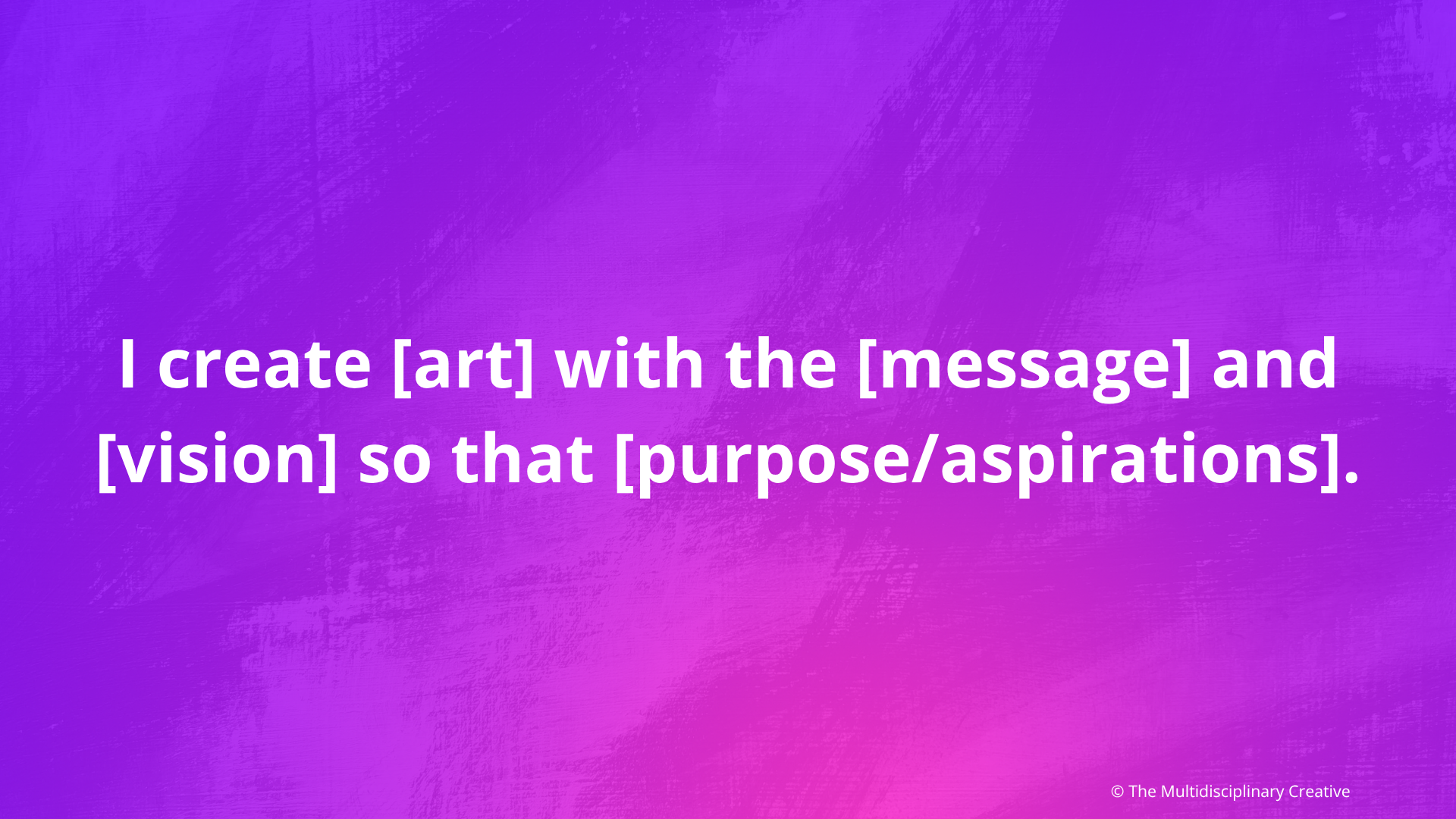
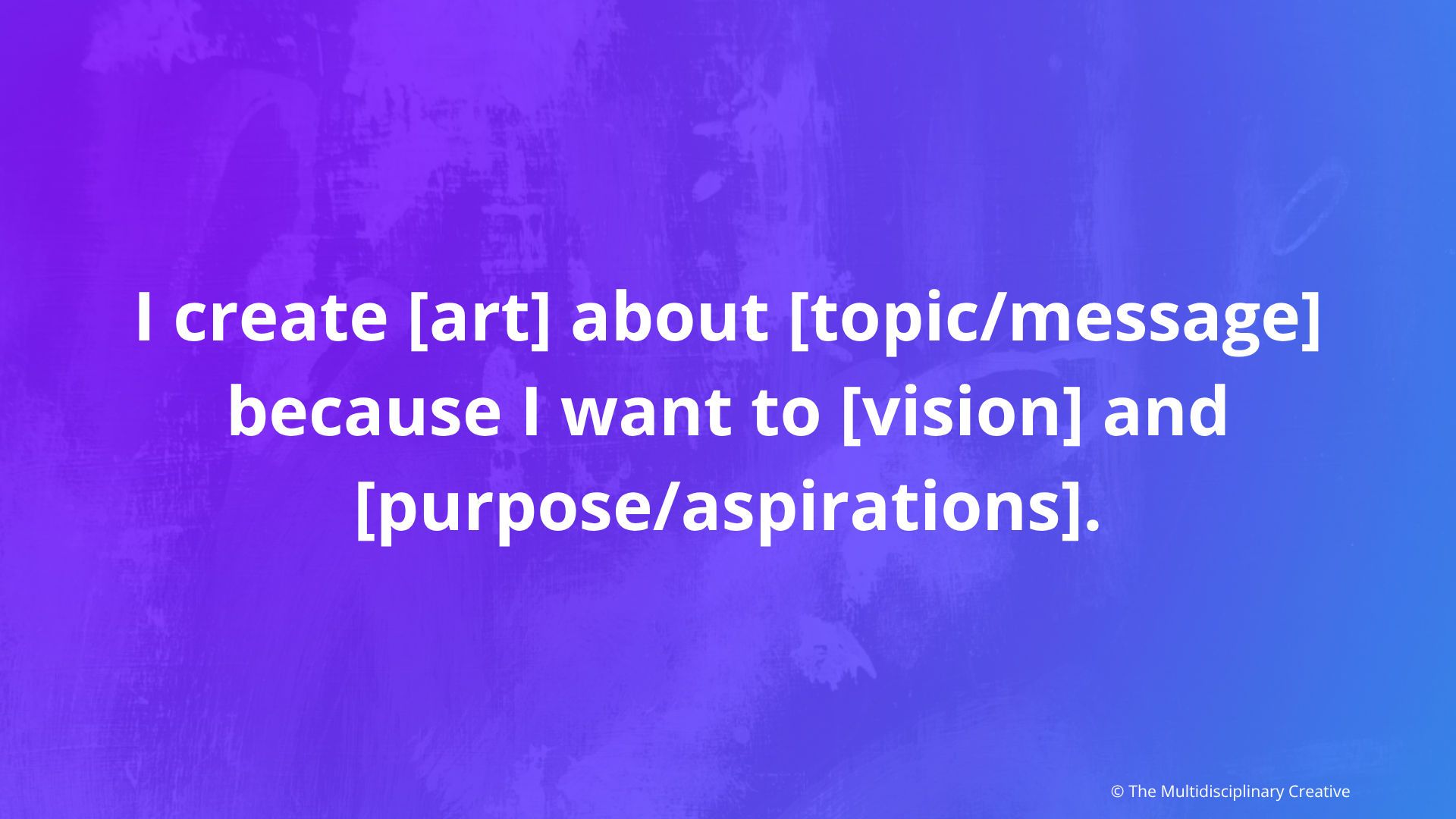
A few examples of this could be:
“I use plastic found on my local beach to create sculptures of the sea life affected by the pollution and communicate the damage plastic does.”
“I write essays about intersectional feminism to be inclusive and educate on the complexities and importance of the topic.”
“I create abstract art with contrasting colors and gold leaf to show that our cracks are where the light enters. I want my art to represent the healing and hope we all need more than ever.”
You might need to write a few of them before you settle on one that resonates with you.
When you’re done, write it on another piece of paper or print it out and put it somewhere you can see it every day.
Explore Your Vision Through Experimentation
The last exercise in this post will take some more work because I want you to explore your vision through experimentation.
While theory and reflection are crucial, putting your vision into practice through your creative work is essential too. Experimentation allows you to uncover new aspects of your voice, explore your message, and refine your vision, to mention a few things.
So, what I want you to do in this experimental exercise is to:
Create a small body of work. It can be a series of smaller paintings, a couple of poems, a couple of story outlines, a series of thumbnail sketches, or something else.
The only requirement is that they ideally should reflect the ideas, emotions, messages, and themes you’ve identified through the previous exercises.
As you create, keep your vision statement in mind and try to incorporate elements from the exercises you may have done in the previous posts in this mini-series as well, for example: personal symbols and aesthetic.
As you create, focus on expressing your vision as authentically as possible.
If you’re not sure about your vision or what you want your art to express, you can also use this exercise as a way to let your creative process reveal what is true for you right now.
When you’re done with this smaller body of work, it’s time to reflect on what you’ve created from the lens of your vision:
What aspects of the pieces feel most aligned with your vision?
How did you incorporate your vision, message, and purpose in your work?
Does the work look the way you wanted it to look? Does it feel the way you wanted it to feel?
What surprises or new insights emerged during the creation process?
Since this experimentation exercise might take some time to work on and explore, I recommend that you do it on the side of your primary creative work. You can see it as a hobby, a side project, or as a self-discovery practice.
Also, if you happen to create ugly art in the process, that’s fine. You might even want to explore this intentionally by making ugly art for experimentation and exploration. It might even lead to some great creative breakthroughs.
Final Words
As I’ve mentioned already, identifying your vision is an ongoing and evolving process. It’s normal for your vision to change over time as you grow as an artist and creative. The key is to embrace this evolution rather than forcing it into a confining box. You can always come back to this post whenever you feel called to reflect on your vision.
Join the MDC email list to get news, peeks behind the scenes, and other things I only share in email right into your inbox.
