Mindset for Artivists: Part 2. Powerful Mindset Shifts
This post builds upon the previous one in this series on mindset for artivists. If you haven’t gone through the post on self-sabotage yet, I recommend doing so first.
In this post, we’ll focus on mindset shifts because they’re a powerful tool to have at your disposal at any given time throughout your creative life and career as an artist creating art for activism and social change.
Many artists and creatives face limiting beliefs that hold them back from reaching their full potential (I’m speaking from personal experience). These beliefs often stem from familial and/or societal influences, personal insecurities, and/or past failures. The good news is that these beliefs can be shifted, and doing so can unlock huge growth, confidence, and resilience, to name a few things.
That is what we’ll focus on in this post.
Specifically, we’ll explore how limiting beliefs can restrict your creative potential, how you can shift those beliefs into empowering thoughts that will help you unlock your full potential as an artivist, and focus on creating impactful work in your artivism practice.
So, without further ado, let’s dive in!
A Fixed Mindset and Limiting Beliefs
Let’s start by exploring thoughts and beliefs because these are the root of everything.
If you’ve ever heard that:
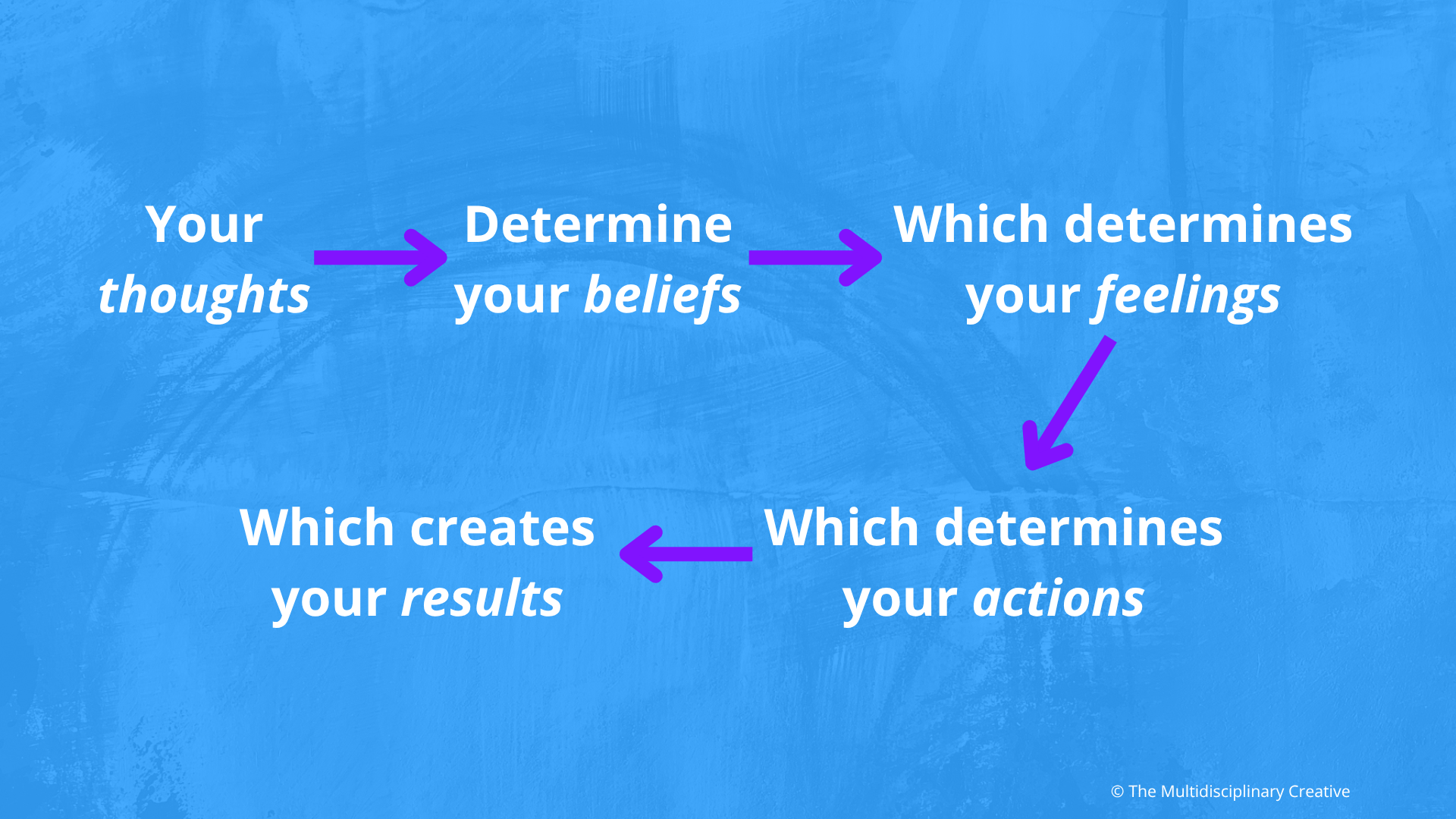
You’ll know that thoughts and beliefs are the root of everything, from the way we feel to the results we see in our work and lives.
In other words, if you’re not having the results you want with your creativity (whatever they may be), you need to explore the thoughts that you’re thinking and the beliefs that you have about your creativity, your work, and even the beliefs you have about yourself as an artivist that are holding you back from the results you want.
So, let’s first look at what a fixed mindset is.
Fixed Mindset
A fixed mindset is a belief system where individuals perceive that their abilities, intelligence, and innate talents are static and unchangeable. They believe that these aspects and characteristics can’t be improved on.
People with a fixed mindset tend to think that qualities like creativity, intelligence, and skill are inherent traits that they either have or don’t. They believe that success is based on being naturally gifted rather than on effort, practice, or learning (i.e., you were either born to be a painter or not, and if you don’t have any talents in painting, you won’t be able to paint very well).
Some of the characteristics of a fixed mindset are:
Avoidance of challenges
Seeing effort as meaningless
Giving up easily
Ignoring feedback
Feeling threatened by other people’s success
Etc.
For creatives, a fixed mindset can be especially limiting because creative work is inherently about growth and development in skills and expression. The more you paint, write, design, etc., the better you become at those skills. The more you express yourself creatively, the better you will become at expressing your artistic voice. But it’s difficult, if not impossible, to do that with a fixed mindset.
Additionally, if you believe that your creative abilities are “fixed” and can’t be improved upon, you may be less willing to take risks, experiment, or try new things. The result of that will be less growth, since taking risks, experimenting, and trying new things are usually where the growth happens. Having a fixed mindset that keeps you from experimenting means that you’re proving yourself right. It’s a self-fulfilling prophecy.
Example: Your thought (“you need talent to be creative”) determines your belief (“creative skills can’t be learned or improved upon”) → which determines your feelings (hopelessness, because there’s no point in trying or doing anything at all) → which determines your actions (doing nothing, because there’s no point) → which creates your results (nothing gets done).
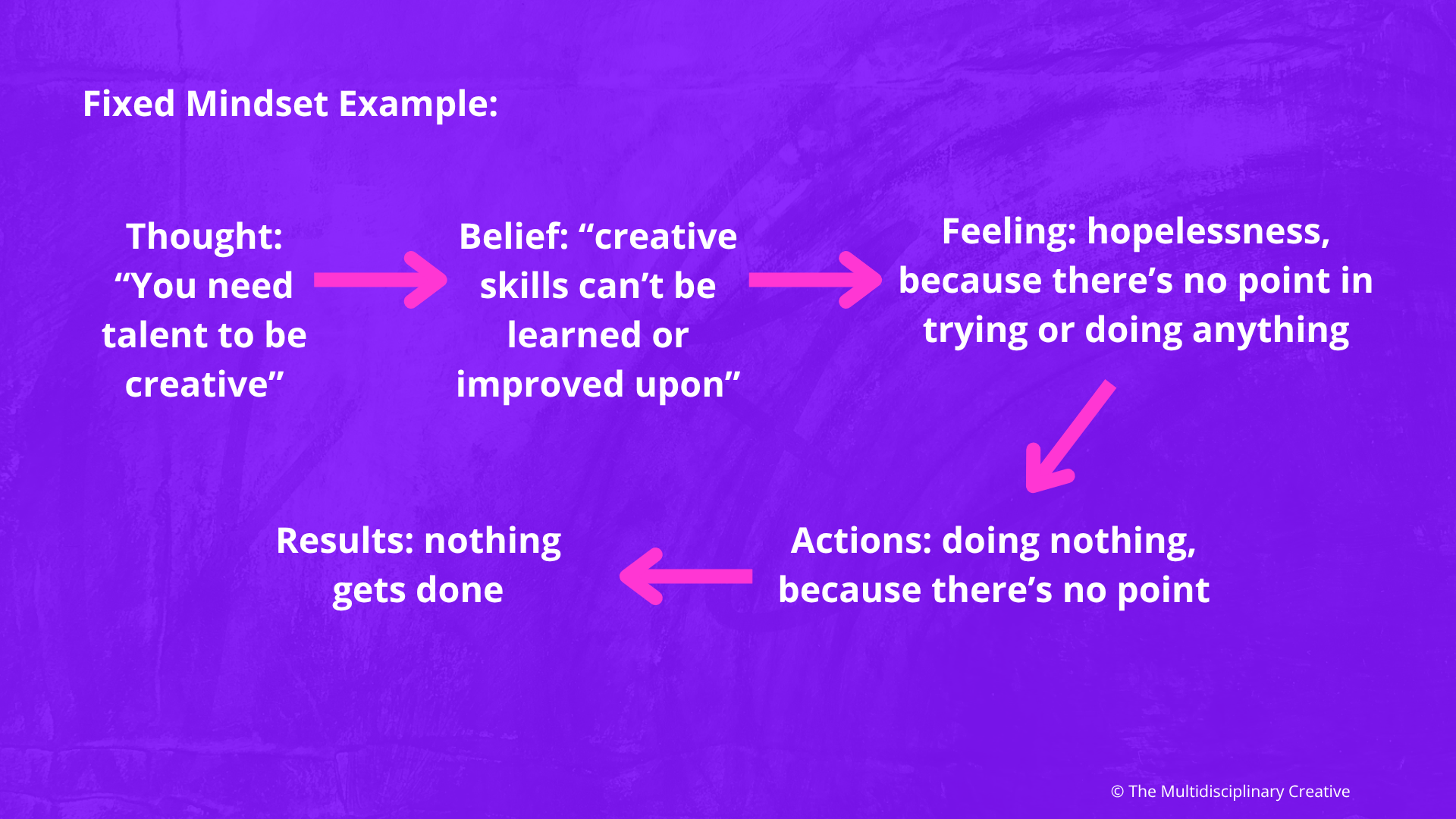
The important thing to ask yourself here is whether you want to be right or create your art.
Now, don’t worry if you resonate with some of these things, because we can shift a fixed mindset into a growth mindset.
But, before I get into some exercises, let’s first explore what a growth mindset is.
Growth Mindset
In contrast to the fixed mindset, having a growth mindset means that you believe you can improve your skills, capabilities, and the talents you were born with. Nothing is fixed. Nothing has to stay the same. If you want to become a better painter, writer, musician, filmmaker, etc., you can.
Those with growth mindsets tend to take risks, experiment, and try new things a lot more. Trying, “failing”, and trying again is a cycle you’re most likely more familiar with, perhaps even excited about, because you know that it will help you learn and grow. It will help you improve your creative skills, uncover your style and voice, make your work better each time, etc. And if you make something you don’t necessarily like, you know there’s a lesson in there about what not to do next time.
Example: Your thought (“I can make impactful art if I want to”) determines your belief (“my art matters”) → which determines your feelings (motivation, because you can make a change in the world through your art) → which determines your actions (experimenting to uncover your themes, message, voice, etc.) → which creates your results (making art).
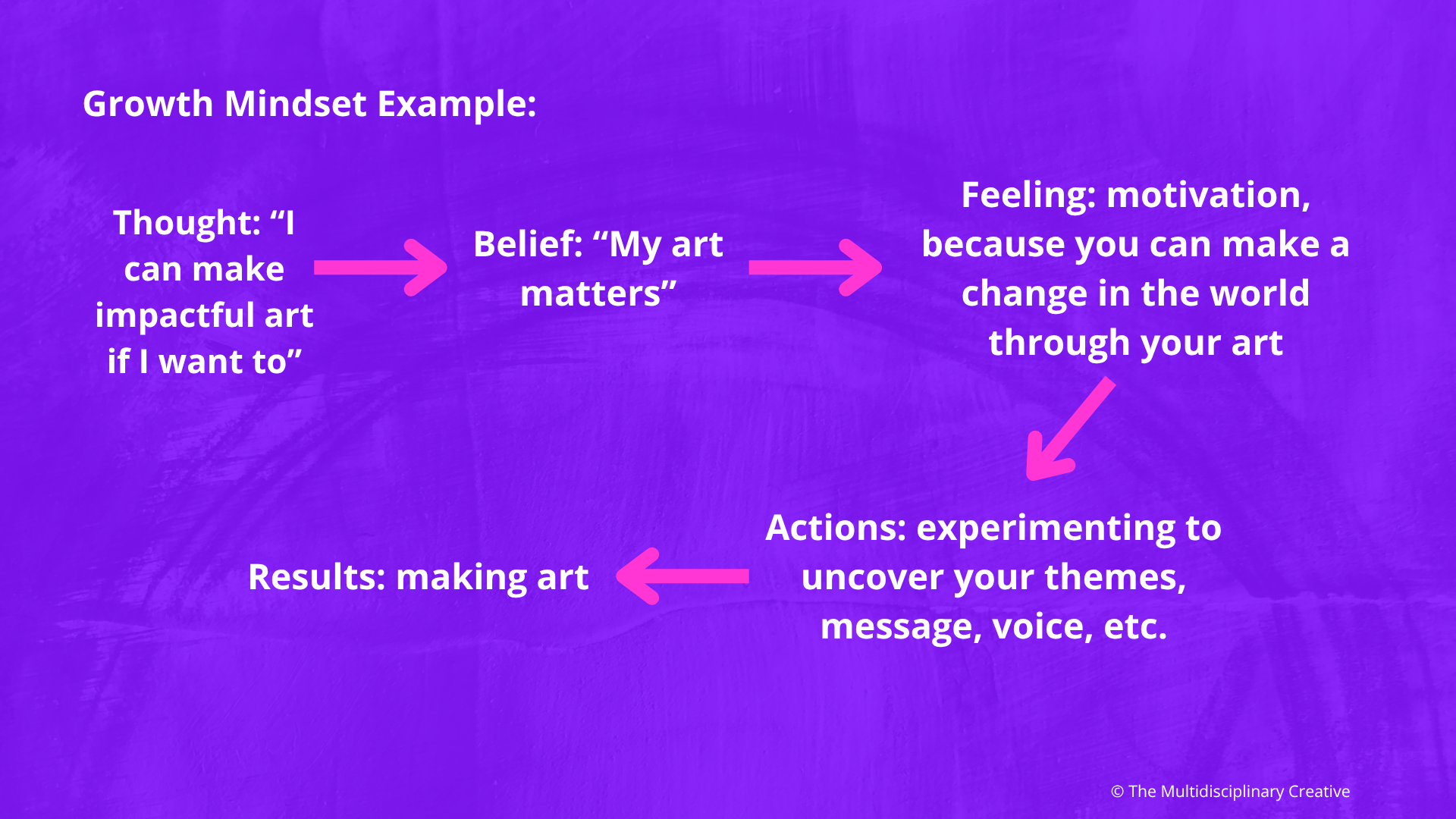
If you want to learn more about the fixed and growth mindsets, I recommend reading Carol Dweck’s book Mindset: The New Psychology of Success, which is where the topic of the growth mindset was first introduced to the mainstream and where I first learned about it.
Before I get into some exercises, I also want to explore the topic of limiting beliefs.
Limiting Beliefs
Limiting beliefs are negative thought patterns or assumptions about ourselves, our creativity, and the world around us. These beliefs often come from past experiences, familial and/or societal influences, personal insecurities, or past failures.
While everyone has them to some degree, when left unchecked, they can significantly impact your ability to achieve success, particularly in creative fields where vulnerability, experimentation, and risk-taking are a part of everyday life.
Some of the characteristics of limiting beliefs are:
Perfectionism
Fear of failure
Self-sabotage
Fear of judgment and rejection
Self-doubt and a lack of confidence
Procrastination and lack of focus
Etc.
As you can see, limiting beliefs and fear are closely related, so if you haven’t gone through the previous post on self-sabotage (especially the section about fear), then I recommend you do that.
Now, let’s get into some exercises.
Exercises
Let’s look at your relationship with a fixed vs a growth mindset:
Do you resonate most with the fixed or the growth mindset? Why?
If you resonate most with the fixed mindset, how can you embrace more of the growth mindset?
If you’re unsure how to answer the previous question, here are some different ways you can explore the fixed vs growth mindset:
When you think about your skills, abilities, or talents, do you see them as things you have or things you can develop? Why?
When you make a mistake or fail at something, what does your inner voice/critic say? What does that reveal about your mindset?
Think back to when you last faced a challenge in your work. What’s the first story you told yourself when that happened? Was it something akin to “I can’t do this” or “I can learn how to do this”? Why do you think that was your default?
We will go deeper into limiting beliefs below, so I’m saving those exercises for later.
Now that we know a bit about what fixed and growth mindsets and limiting beliefs are, let’s look at how we can shift them to something that’s a lot more supportive and empowering.
Key Strategies for Shifting From a Fixed to a Growth Mindset
Let’s start with how to shift from a fixed to a growth mindset.
To do this, it’s important to start seeing challenges and “mistakes” or “failures” as opportunities to learn and improve.
Let’s look at a few key strategies:
Embrace challenges: Instead of avoiding difficult tasks, try to see them as opportunities to grow and expand your skills and abilities. If you, for example, feel stuck in a creative project, take a moment to reflect on possible solutions to that situation rather than just moving on to the next project.
Learn from “failure”: When something doesn’t go as planned, view it as a valuable lesson rather than a mistake or failure. If you, for example, overworked a painting to the point where you feel like it’s beyond repair, take a moment to reflect on possible lessons you can derive from that situation. You could ask yourself:
Where could you have stopped working on it?
Why did you choose to continue working on it?
And other such questions that will help you get to the root of why you got the result you now have and how you can avoid that next time.
Value progress over perfection: Celebrate small wins and improvements instead of expecting immediate, flawless results. Also, let it take its time. Don’t expect to have something great after just one day, or a week, or even a month (depending on the size of your work or project). Let it take the time it needs.
By adopting a growth mindset, you can build confidence, become more resilient, and ultimately unlock your full potential as an artivist. Doesn’t that sound great?
Exercises
Let’s dive into some exercises on your relationship to challenges and “failures”:
Do you embrace or feel uncomfortable when faced with challenges on your creative journey?
If you feel uncomfortable, how can you embrace challenges a little more and become more comfortable with them?
What kinds of challenges do you struggle with most? How can you view them differently?
How do you usually react to “failures” in your work or on your creative journey? Here are two contrasting examples:
Do you self-criticize? If so, why? How does that make you feel? What does it result in (i.e., self-sabotage, feeling stuck, not wanting to make any art, etc.)?
Do you see the “failures” as lessons? How does that make you feel? What does it result in (i.e., growth, confidence, more exploring and experimenting with your art, etc.)?
If you struggle to see the lessons in “failures” but want to learn how to better do it, here’s a simple exercise:
Think about a current or previous project or decision you made in your creative work that you think was a failure.
What’s one small tweak or change you’ll make in the next work or project? Or, another way to look at it: In this “failure” of a work or project, what did you learn not to do in the next one?
Note that it may take some practice to see the lessons objectively without any harsh self-criticism. But the more you practice, the easier it will get. Also, remind yourself of the other key strategies above as you move along on your creative journey.
To end on a more positive note: What are some recent small (or big) wins you’ve made on your creative journey or in your current/most recent project? Did you celebrate them? If not, how can you celebrate them?
Now, let’s look at some powerful mindset shifts.
Shifting Limiting Beliefs into More Empowering Alternatives
Let’s explore some common limiting beliefs that many artists and creatives struggle with (myself included), and how you can reframe them into more empowering alternatives.
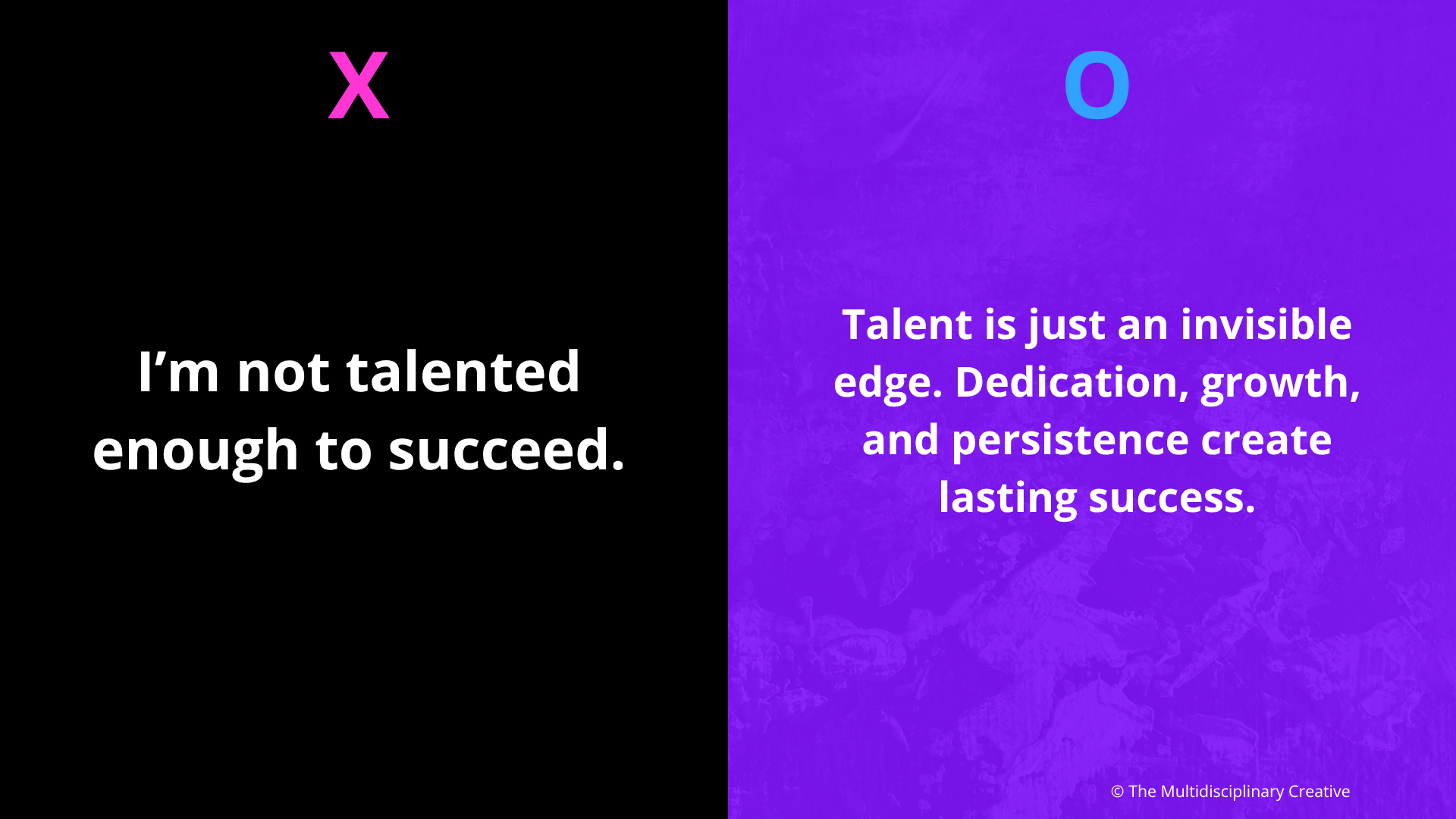
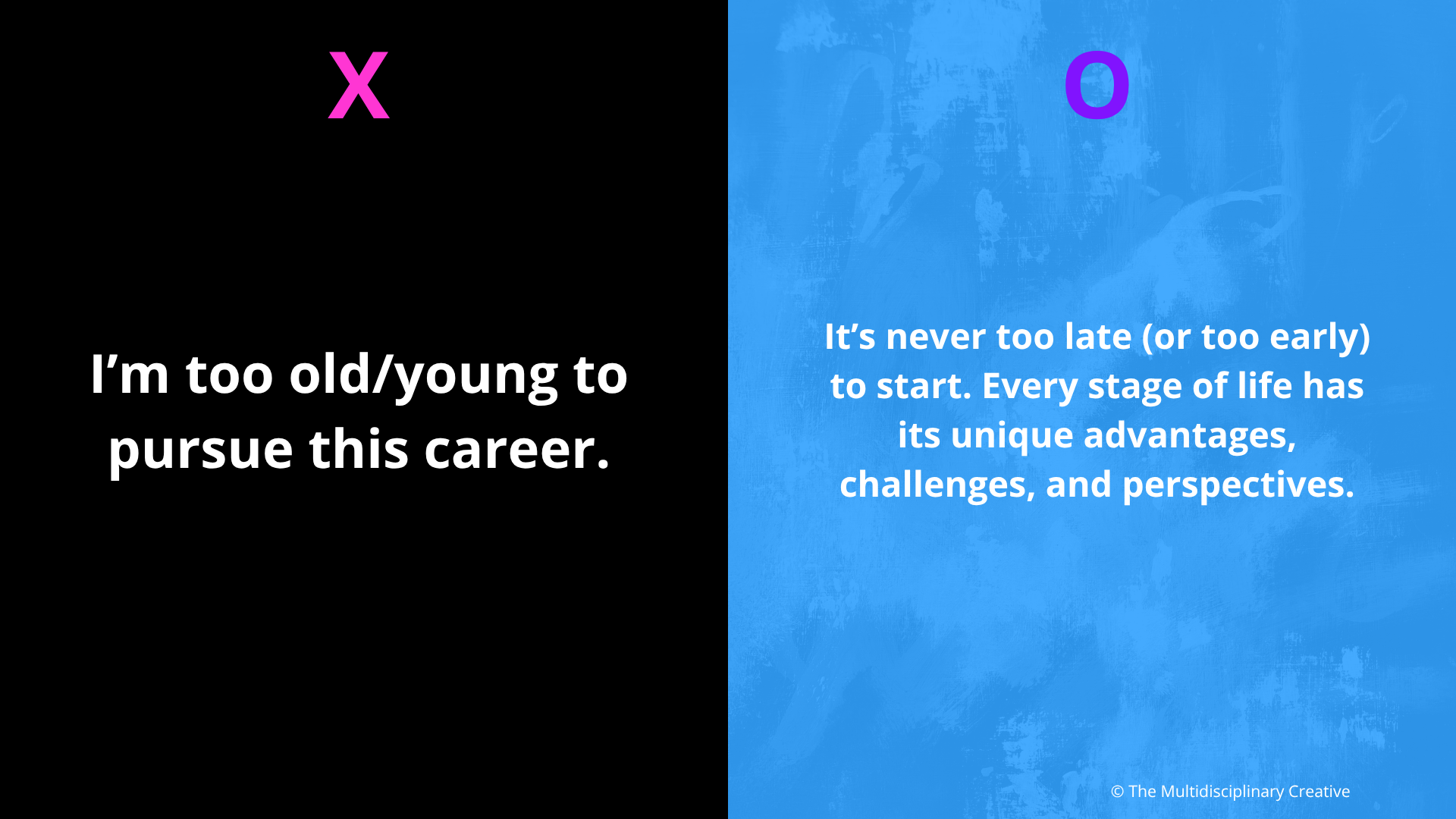
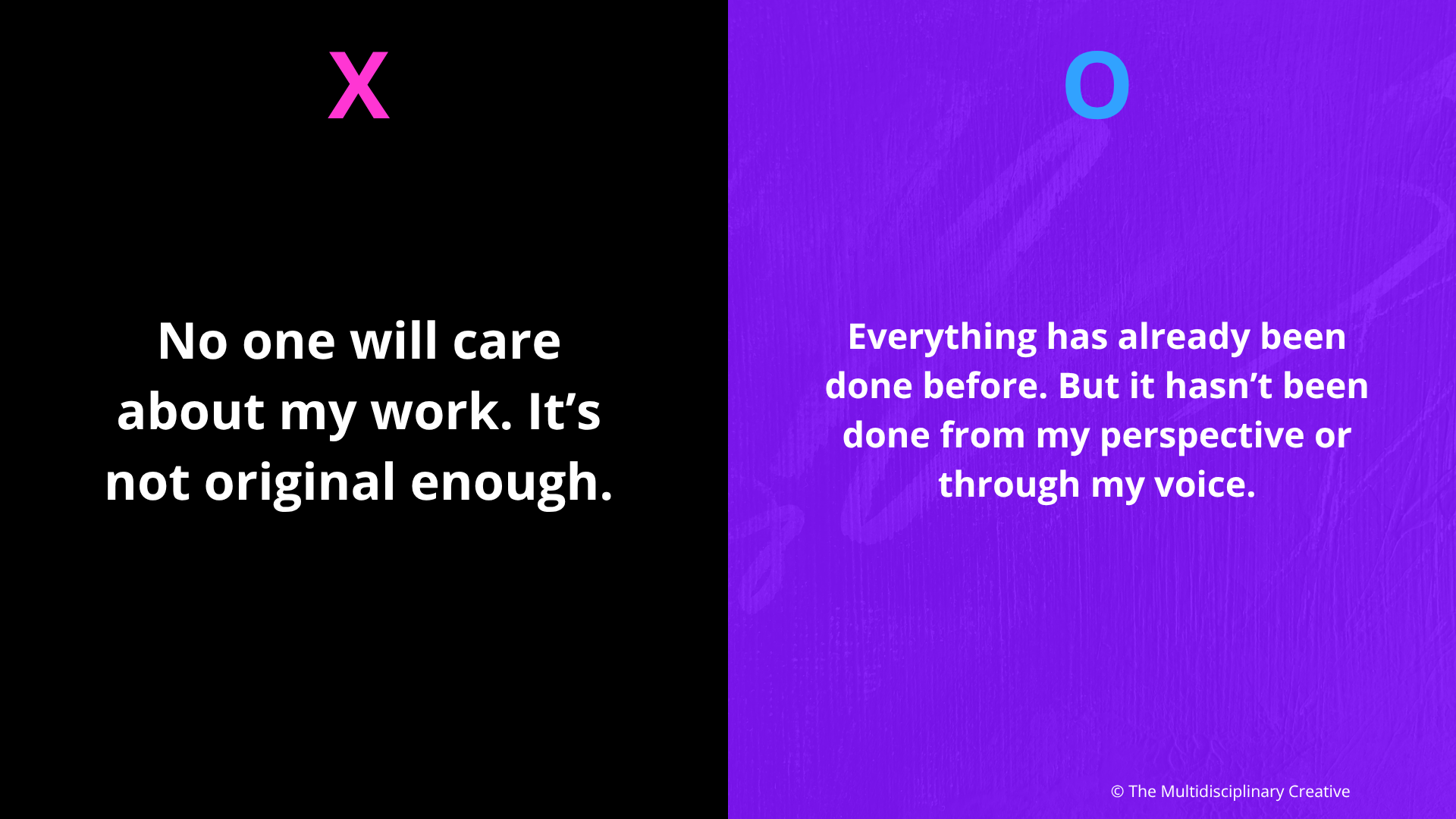
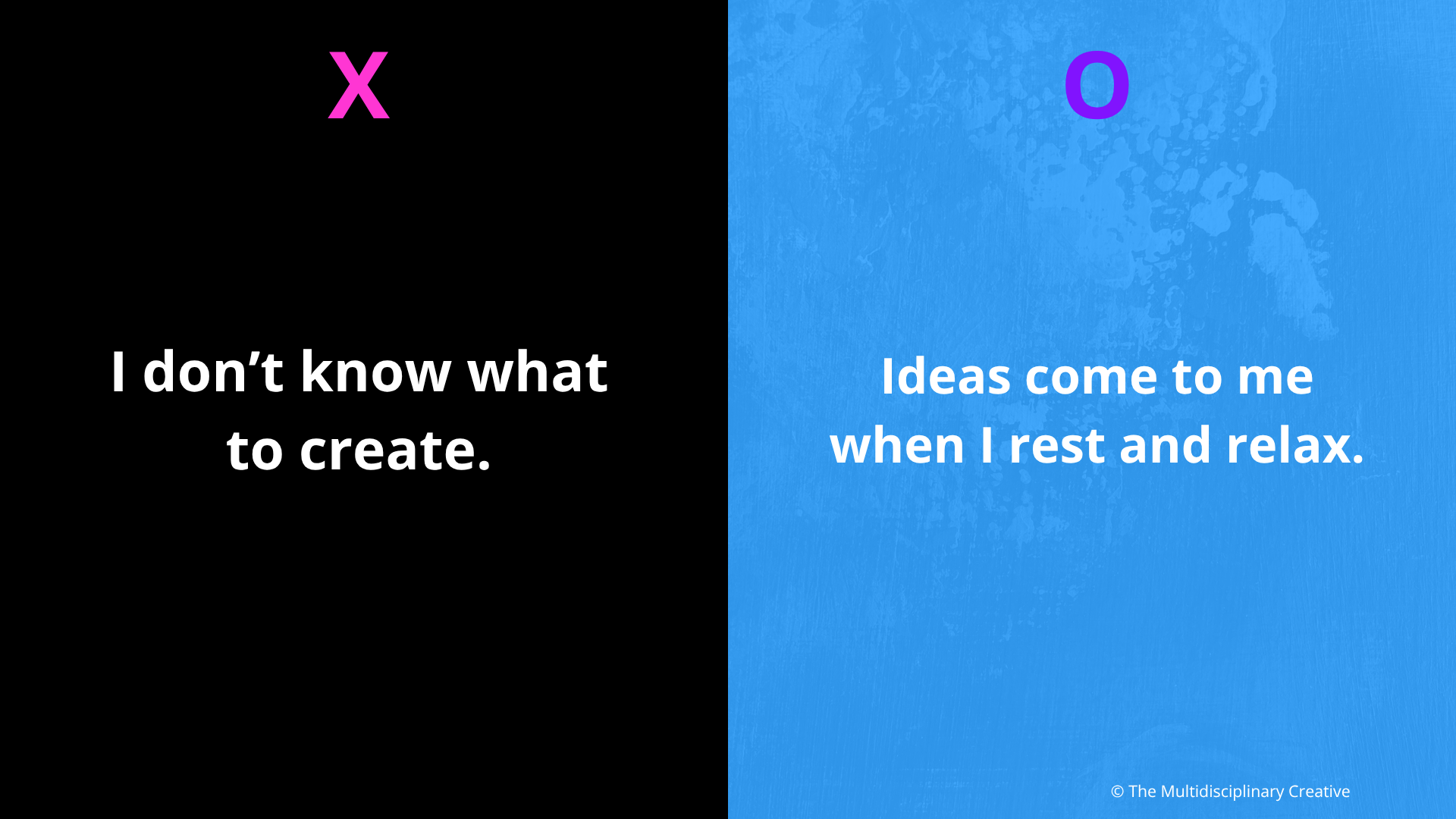
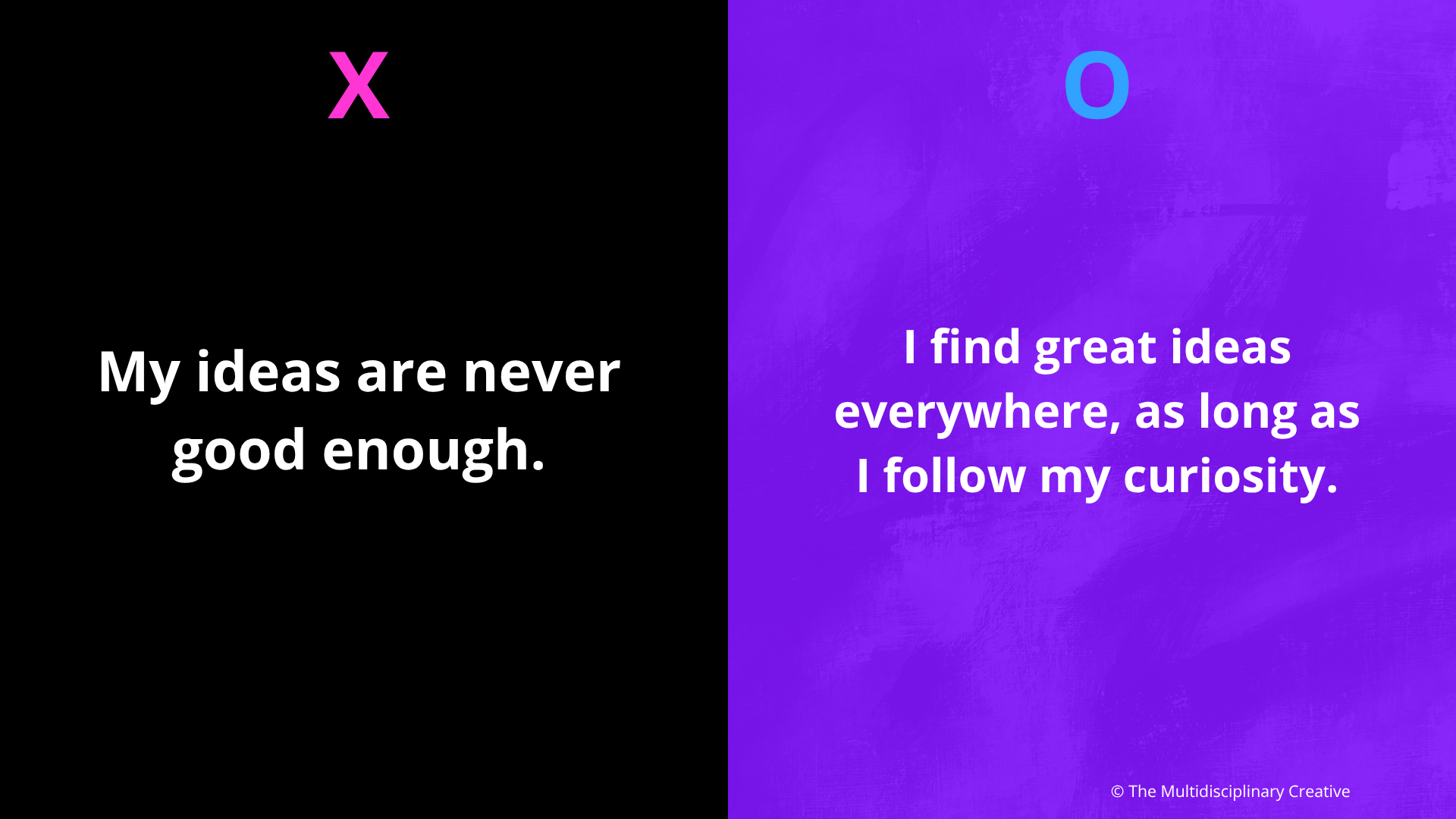
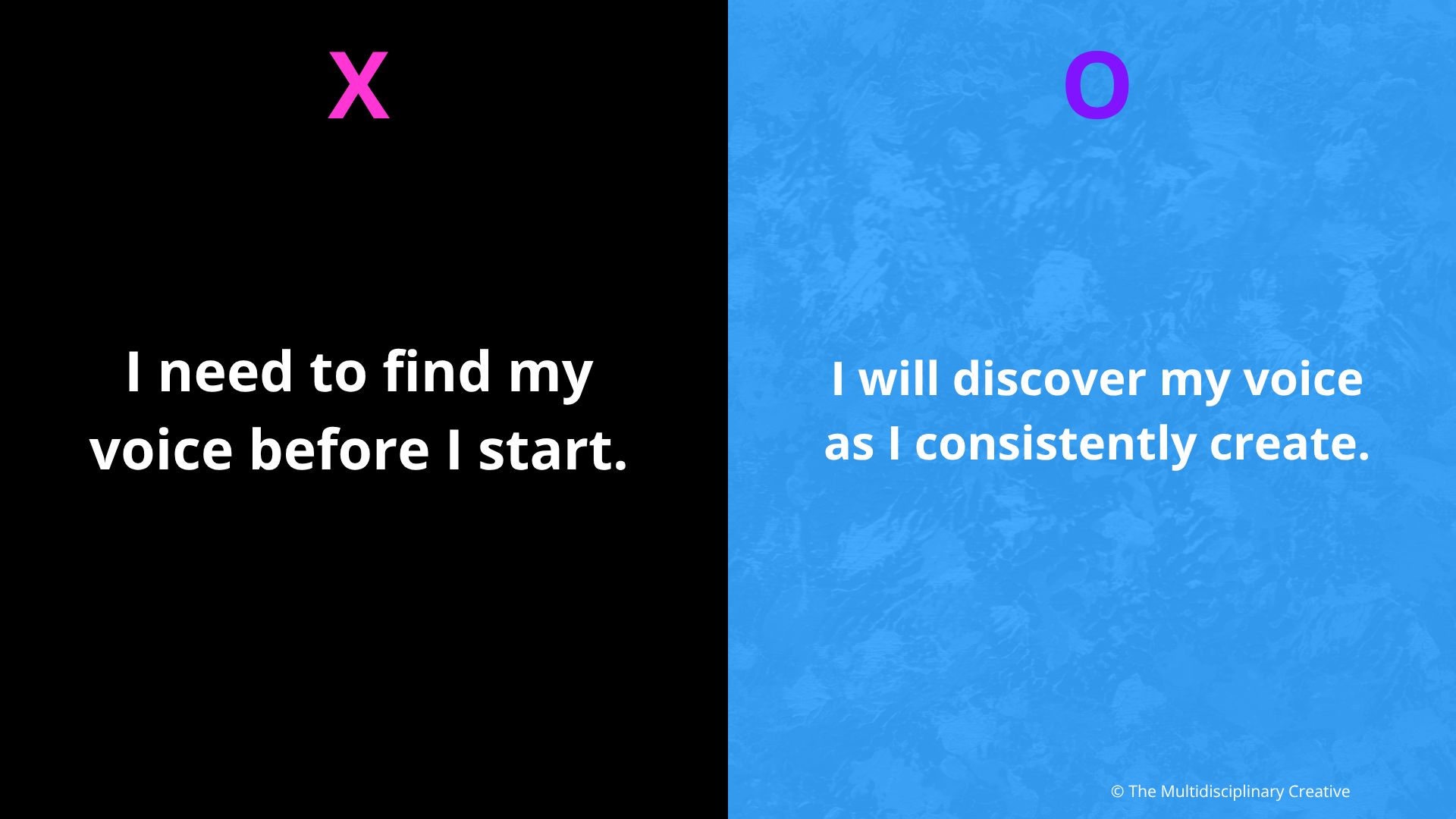
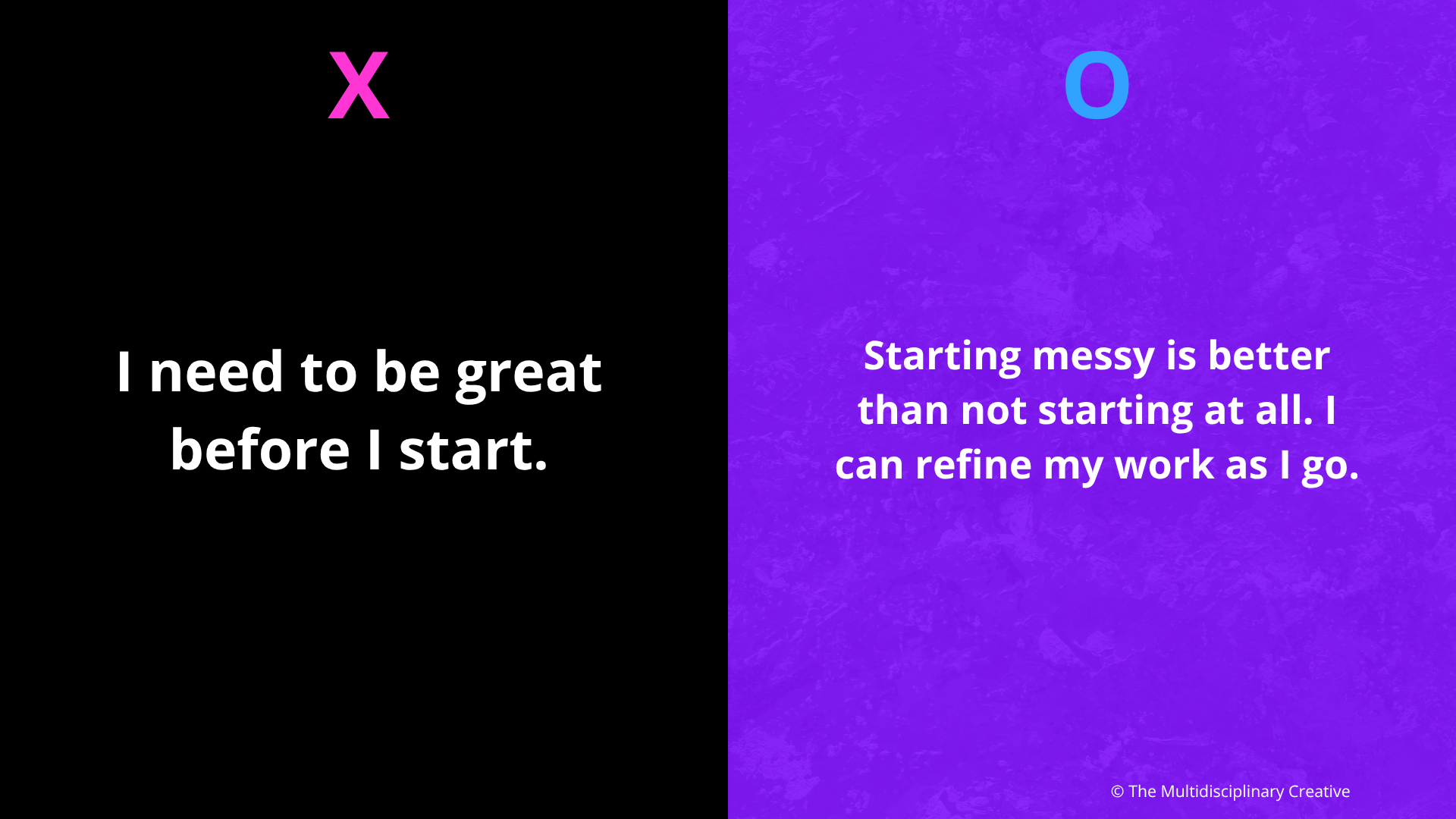
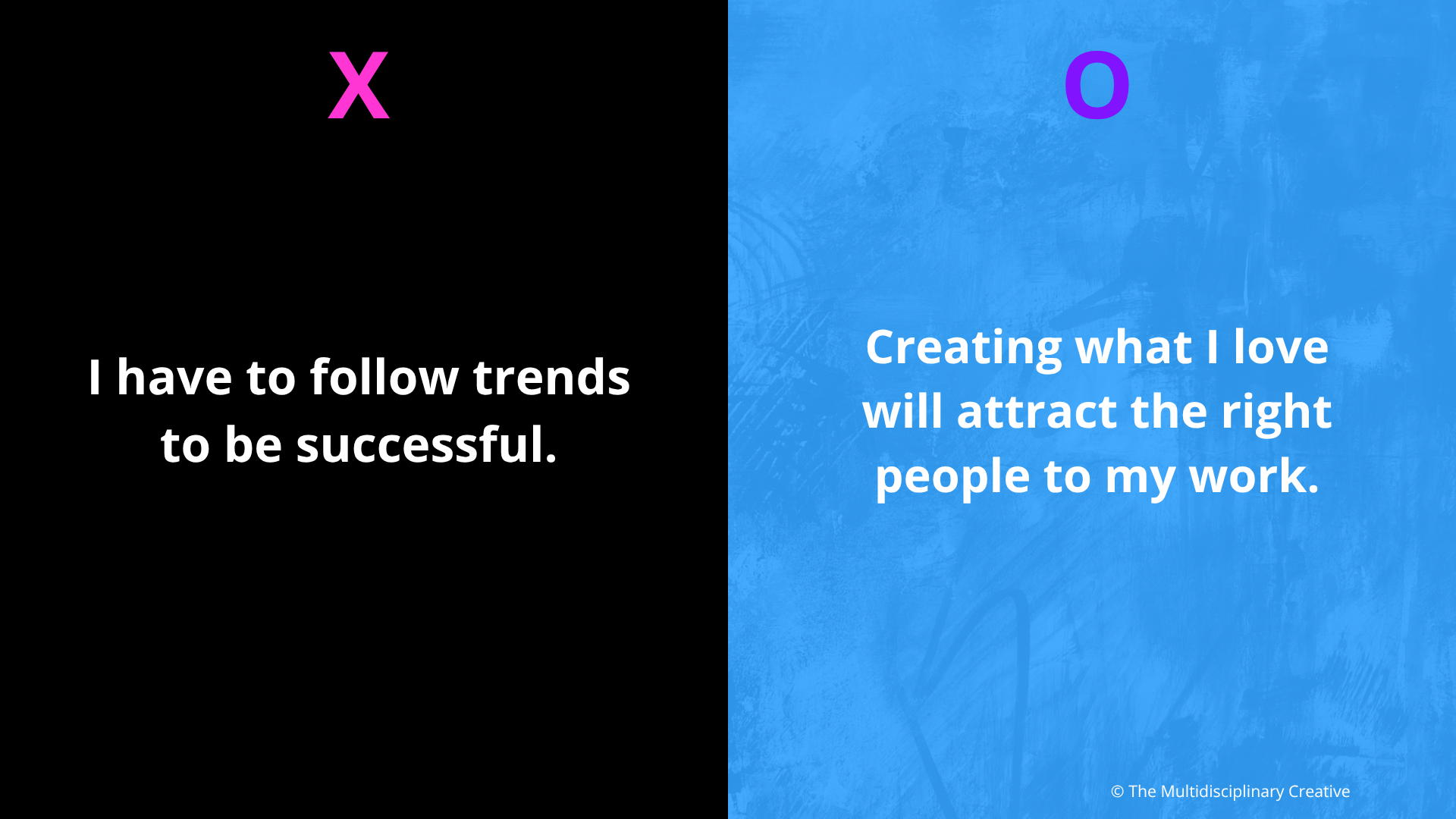
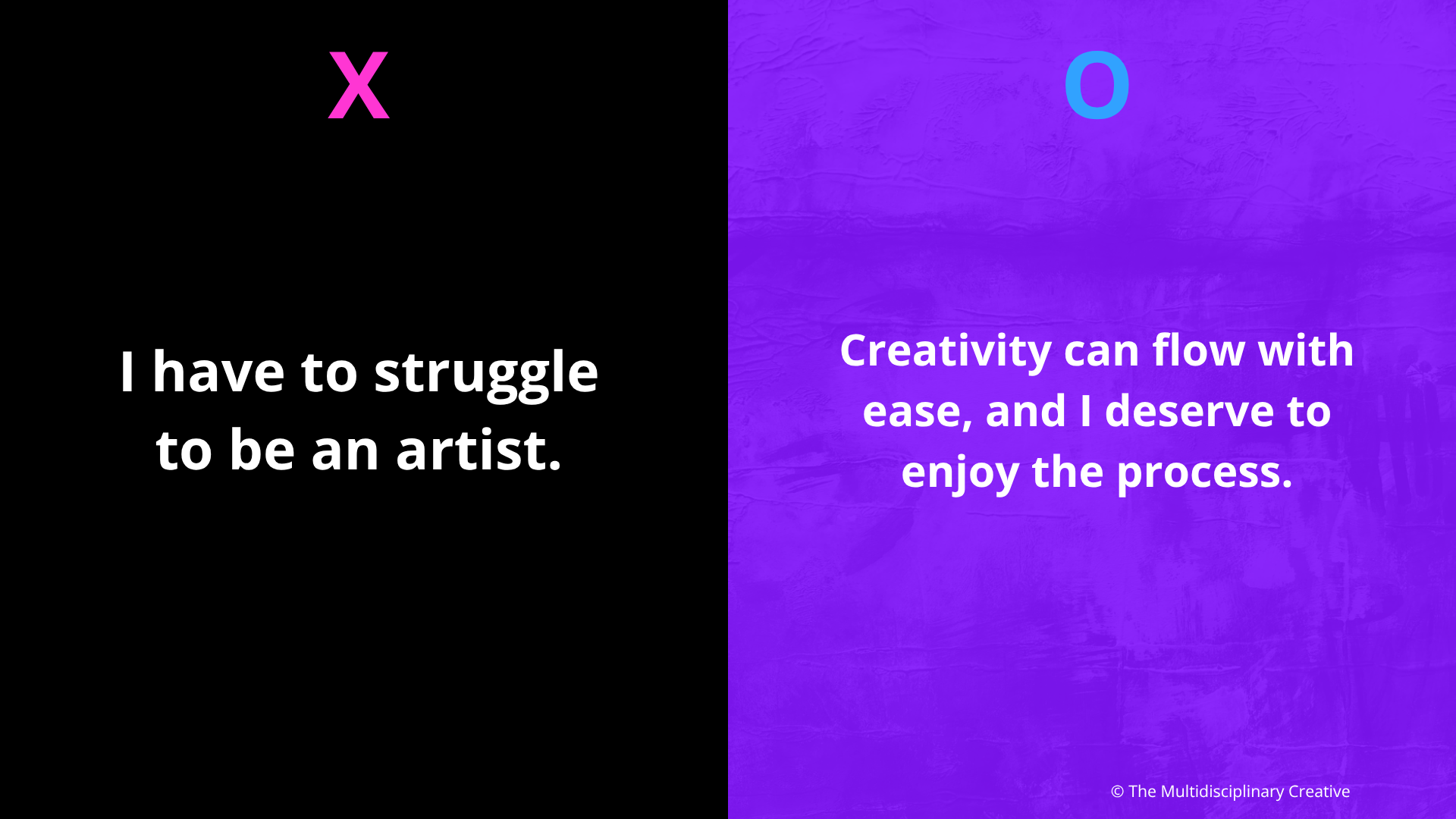
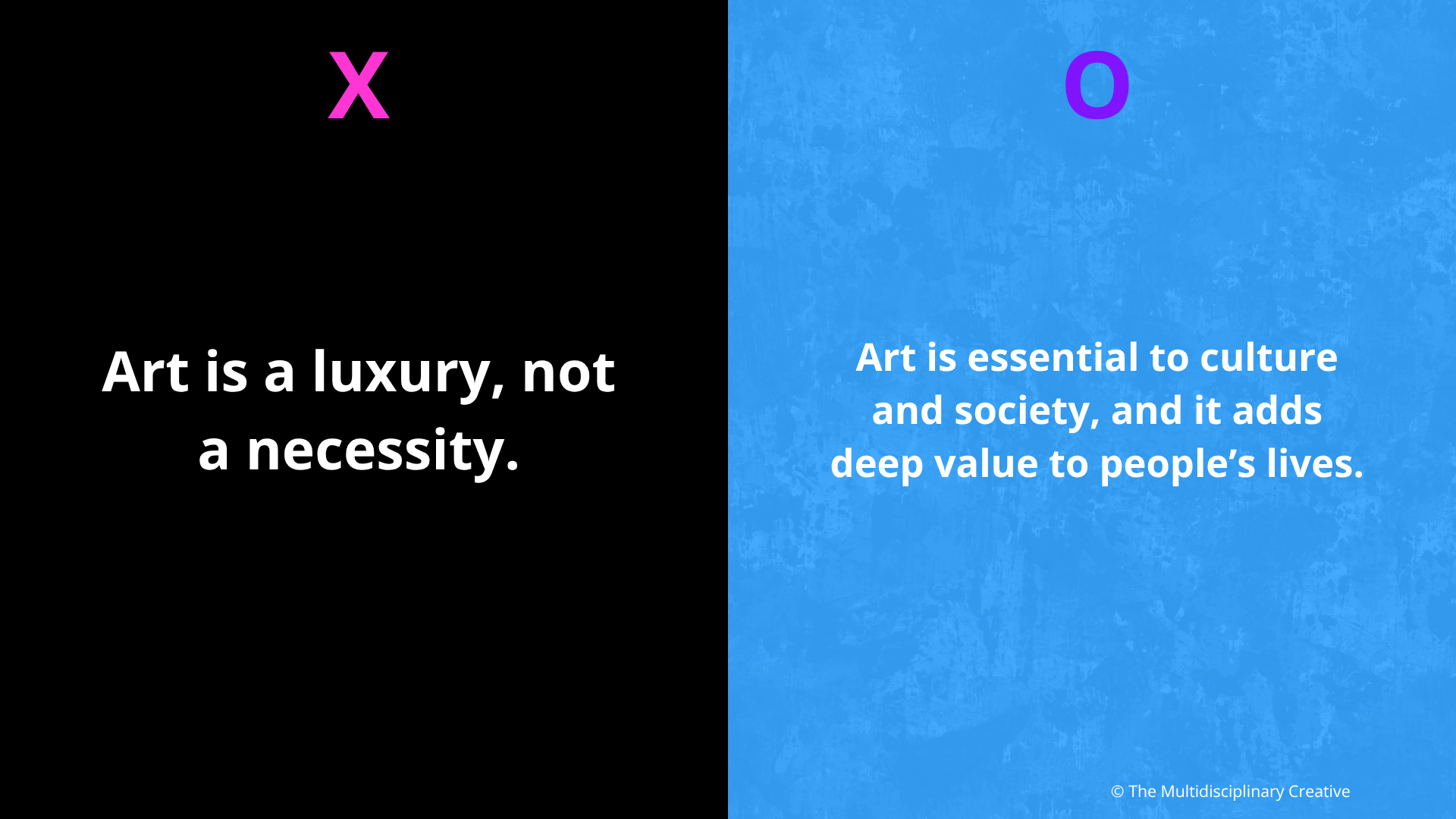
Don’t those empowering beliefs feel so much better? And the great thing about them is that you can use them, and others, every day to shift your beliefs.
I know that when I ask you to let go of those old, limiting beliefs that are holding you back, I’m making a big ask. I’m literally asking you to become the next-level version of yourself.
I know that this is no small deal because I’m asking you to shift into a whole new way of thinking and acting, and that’s not easy. However, shifting into these new beliefs is also what helps you step into your full potential.
The next level of you won’t allow self-sabotage to operate under the radar. Awareness of what’s going on and why you’re really holding yourself back from creating your art is key to realizing what you can do about it.
And that’s a major characteristic of a courageous artivist. The courageous artivist that I know you are.
Exercises
Here are some more practical tips on how to shift beliefs:
Do a brain dump of all the thoughts and limiting beliefs you have about your creativity and projects.
You can write it down in a list, in a mind map, or just wherever you want on the page. It doesn’t matter. All that matters is that you get it all out of your head and onto paper.
Make two columns on a new page and title one “Limiting Belief” and the other “Empowering Belief”.
Put everything from your brain dump into the column for limiting beliefs, then transform those beliefs into more empowering ones (similar to how I did in the images above).
Then go back and read your Empowering Beliefs and choose however many you want to use as affirmations when you notice self-doubt creeping in.
If you want to, you can place the Empowering Beliefs somewhere you’ll see them every day as a reminder of these new beliefs you want to adopt.
Final Words
Mindset is one part of the foundation when it comes to creativity and success. By identifying and shifting your limiting beliefs, you can unlock your full potential and move forward with confidence and courage on your artivism journey.
Remember: It’s not about having the perfect mindset all the time, but about learning to catch yourself when limiting beliefs creep in, and consciously shifting to a more empowering thought. With practice and persistence, you’ll see not only a transformation in your mindset but also a transformation in your creative work and impact.
Now, I would love to hear from you. What’s your biggest limiting belief, and the empowering alternative you want to choose instead? Share your answer in the comments below.
Join the MDC email list to get news, peeks behind the scenes, and other things I only share in email right into your inbox.
