An Artivist's Guide to Making Art for Social Change
Latest update: 2026-03-06
It’s more important now than ever to stand up for what you believe in. As an artist and creative, you can use your creativity and art to show your support by making art with specific topics and movements in mind to bring awareness to social issues and injustices of your choice.
In this guide, I’m covering the following:
What is Artivism?
Benefits of Artivism
Dealing With Resistance, Doubt, and Fear
Taking Care of Your Health and Well-Being
How to Make Art for Activism and Social Change
Without further ado, let’s dive in!
What is Artivism?
Artivism is, first and foremost, a portmanteau of the words “art” and “activism” (art + activism = artivism).
Historical Roots
I couldn’t find a credible source for where the term “artivism“ was coined. I found a comment on Wikipedia that it was coined in 1997, but there was no official source, so it may or may not have been established at the end of the 1990s.
However, no matter when the term itself was coined, the practice of using the arts for activism and social change has existed for centuries.
The earliest artist I can remember off the top of my head is Artemisia Gentileschi, an Italian painter during the Baroque era. Especially the art where she depicts beheaded men or men being killed by women, which has been seen as her response to being raped by fellow artist Agostino Tassi:
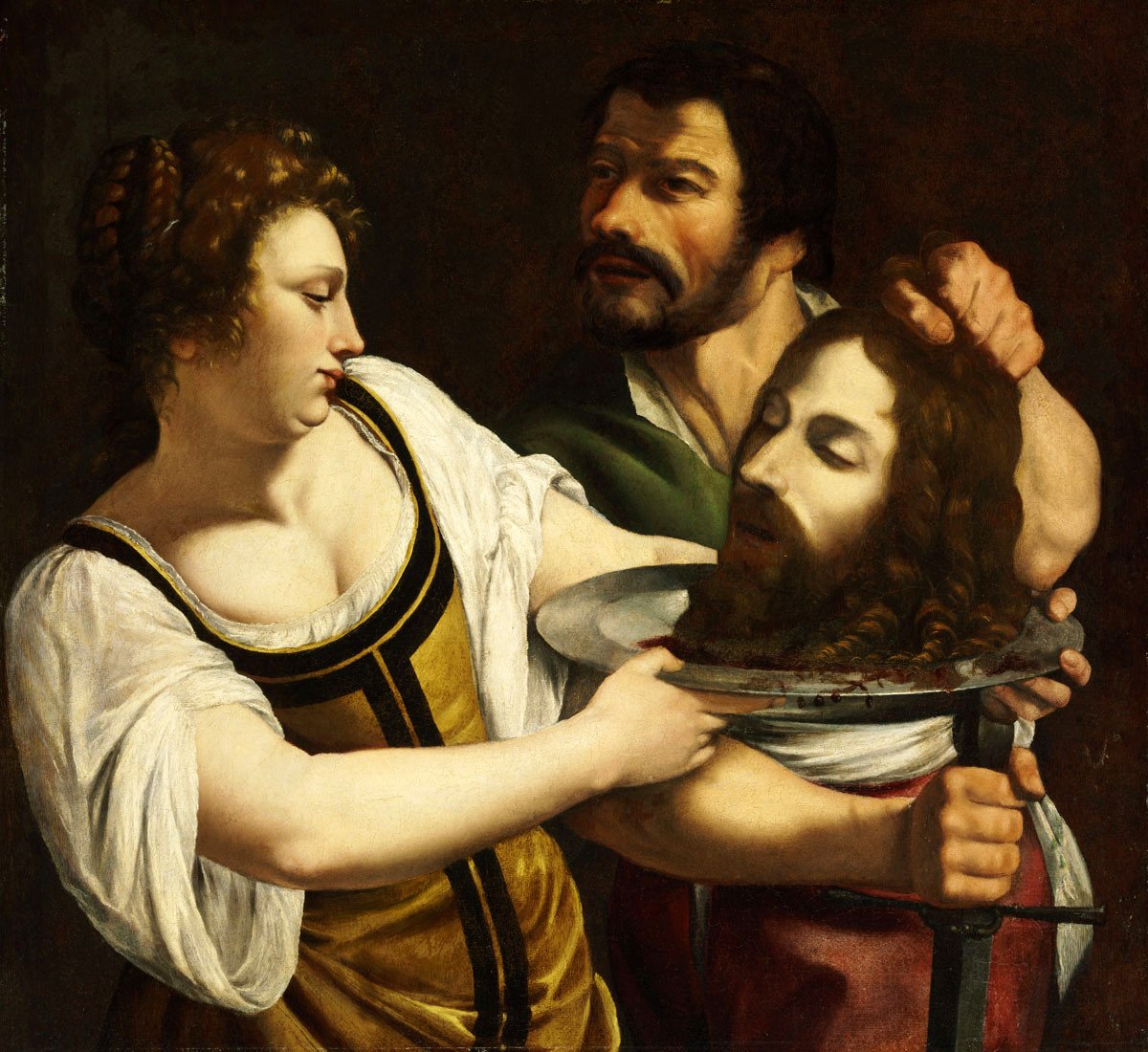
Salome with the Head of Saint John the Baptist, c. 1610–1615.
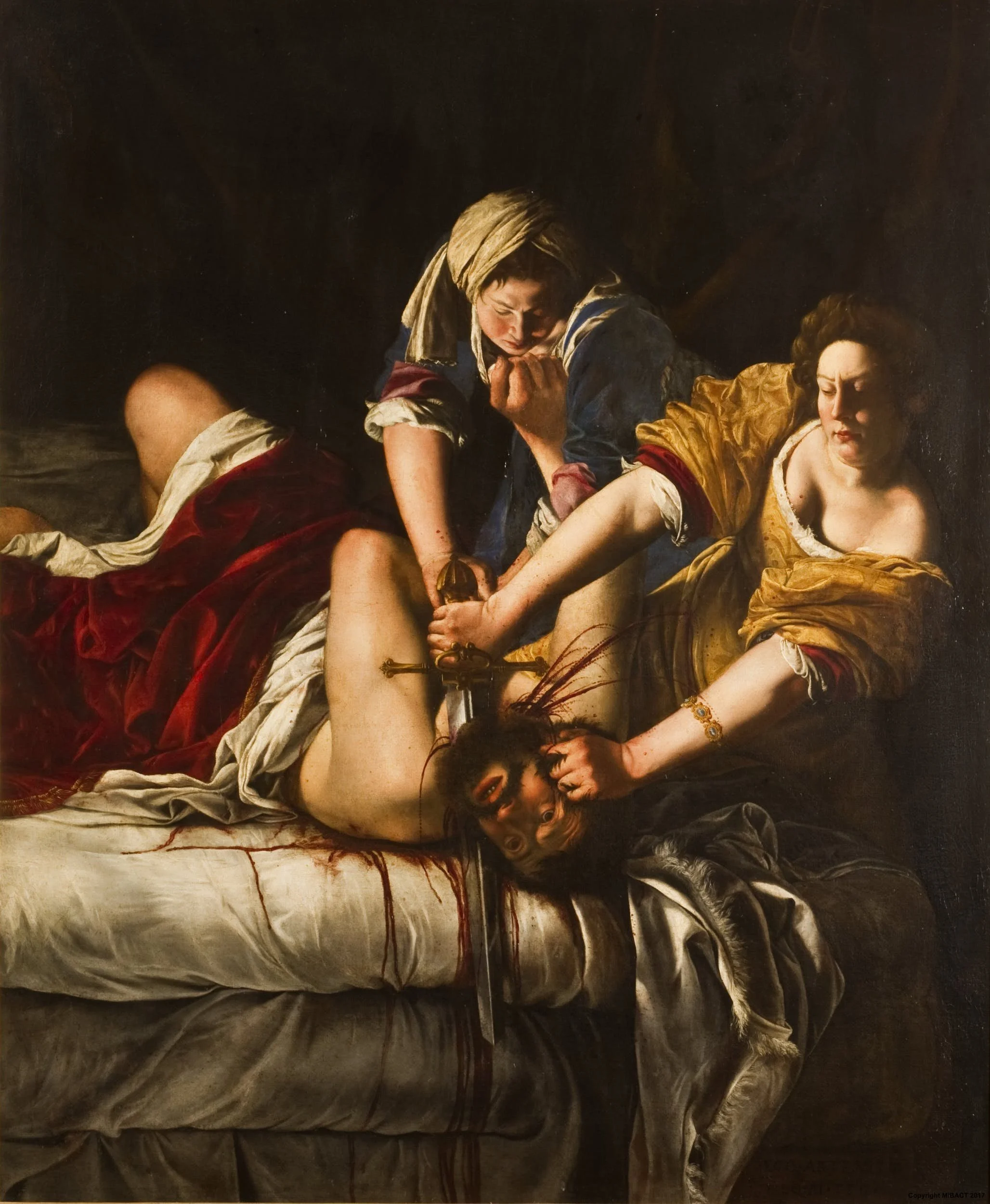
Judith Slaying Holofernes, 1614–1620.
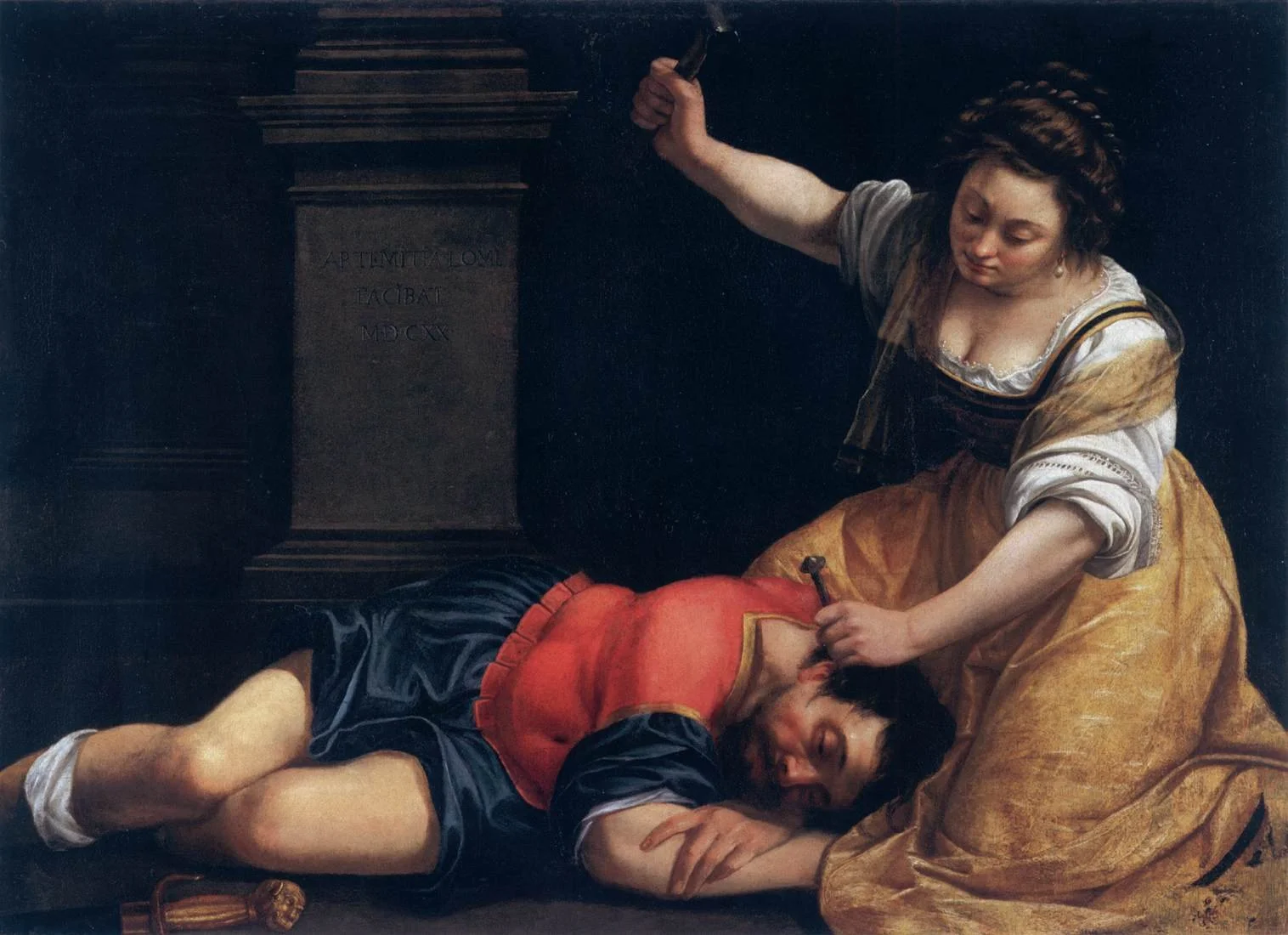
Jael and Sisera, c. 1620.
However, I’m sure some artists used their art to protest social issues and injustices earlier than that, especially injustices like war, which is a common theme.
Besides protesting war and promoting peace, there are a variety of different social issues, injustices, and movements that can be included in the big movement that is artivism. The basic criteria, however, is that the art is used to highlight, protest, and bring awareness to a specific social issue.
It can be used to:
Bring awareness to, and change, structural discrimination of all kinds (i.e., sexism, racism, ableism, ageism, etc.)
Give a voice to marginalized groups
Create actual social change
And so much more
Artforms and Media
Different media can be used for the purpose of bringing awareness to social issues. Some of the most common are:
Visual Art
Visual art for activism and social change includes several different types of art forms. Here are some examples:
Paintings
Photography
Just like painters, there have been photographers who have taken photos of different injustices in the world to bring awareness to them.
Graffiti and Murals
One famous example of graffiti artists who use their art for activism is Banksy.
Posters and Banners
Posters and banners, and other printed material, are a common medium used in protests and demonstrations. It can also be used to put up in public spaces to bring awareness to social issues and injustices.
Video Art (including film)
Film is also a medium that has been used to highlight social issues and injustices. It has been explored both through documentaries that depict social injustice more factually, and in fictional films where the main theme or a character experiences the social injustice that the filmmakers want to highlight.
When it comes to fictional films, social issues and injustices can be shown in metaphorical or allegorical ways. An example of this could be The Matrix being seen as an allegory of the trans experience, which was widely discussed after the creators of the film, Lana and Lilly Wachowski, both came out as trans women.
Performance Art
This includes:
Spoken Word/Poetry
This could include speeches at protests and demonstrations as well.
Dance and Flash Mobs
An example of how dance can shake things up can be seen in the film Step Up Revolution. While it is fiction, it depicts flash mobs and the impact they had in protecting the community they’d built by stopping the development of their neighbourhood.
Music
Music can use both words and melodies to highlight social issues and injustices. Having the melody accompany the words gives it another dimension where the emotions you want to portray deepen.
An example of how music (and video) can be used to bring awareness to certain topics is in Ludovico Einaudi’s collaboration with Greenpeace. This collaboration highlights global warming as Einaudi plays “Elegy for the Arctic”, in the middle of the Arctic, on a stage that looks like an ice floe. The moment when the iceberg falls apart in the middle of the video gets me every time.
Theater (incl. Street theater)
Like film, theater also uses acting and storytelling to highlight social issues and injustices to an audience.
Literary Art
Literary art can be used in several ways to highlight social issues and injustices. Two main categories are non-fictional (or factual) and fictional, but each of them includes a variety of ways to highlight social issues and injustices:
Non-fiction works could include textbooks, essays, and other non-fiction books and articles that highlight social injustice from a factual, researched, biographical point of view, etc.
Fictional stories can depict social issues and injustices through metaphors, allegories, themes, characters, etc. Some can be more explicit than others in their depictions.
Poetry is also a great way to bring awareness to social issues and injustices.
Types of Artivist Movements
Artivism is a movement that includes a broad variety of art categories, or movements that weave into each other, for example:
Protest Art
Protest art is just what it sounds like. It’s art made by artists and movements that act as a tool to raise consciousness and awareness around social issues. These kinds of artworks are often used as part of demonstrations and protests.
Usually, they include things like signs, posters, banners, and other printed materials. It can also include street art and graffiti, as well as performances.
This is probably the broadest category that weaves into one or two of the others below, as well as through a lot of other art movements for social change and activism.
Guerrilla Art
Guerrilla art is a form of artistic expression used in public spaces, such as on the street, in subways, etc. They are usually meant to surprise, provoke, and disrupt with their often political or social messages.
It first emerged in the United Kingdom, but it’s a globally used artistic expression nowadays. While it started as a graffiti movement (and is still used in that way), stickers, posters, banners, etc., can also be used.
An example is the Guerrilla Girls, who bring awareness to the sexism and racism within the art world. They’re known for staging surprise exhibitions and hanging up posters in public spaces to spread their message.
Community Art
Community art is a practice where, usually, professional artists collaborate with members of specific communities that they want to highlight, give space to share their voices and stories, and bring awareness to social issues within those communities.
It’s a collaborative practice where they can create art to prioritize interaction, dialogue, and mutual participation. It also fosters connection, giving voice to specific communities, offering different ways to express themselves, and promoting social change.
Usually, community art can take the form of performances, public murals, installations, etc.
Culture Jamming (Including Subvertising)
Culture jamming is a form of protest, art that uses media and mainstream culture and institutions, including advertising, to promote anti-consumerist ideas. It’s often used as a way to produce satirical commentary about culture and consumerism.
Subvertising, specifically, is the practice of altering or replacing specific advertisements to create critical messages. It’s also a portmanteau of the words “subvert“ and “advertising“ (subvert + advertising = subvertising).
Non-Violent Communication
While a lot of the art within the artivist movement can seem disruptive and perhaps even controversial to some people, at the core, artivism is a form of non-violent communication that focuses on the message and bringing awareness to social issues and injustices.
In many cases, the art made for activism and social change can actually unite rather than divide. Take, for example, the song "Quiet" by MILCK, which gained international popularity after being performed at the Women's March in 2017, as well as the Chilean song "Un Violador en Tu Camino" (A Rapist in Your Path), which became a widely used protest chant in late 2019 and early 2020.
Purpose and Benefits of Artivism
I’m a firm believer that the world needs your art. Additionally, there are many different benefits of artivism and making art for social change. Let’s go through some of them.
Provoke Emotions
One of the key aspects of making art for activism and social change is to provoke emotion in the audience.
Provoking emotions is a cornerstone of art. Art has a way of changing our lives due to the emotions it provokes and the thoughts, ideas, and beliefs it sparks within us. It’s no different in art for activism and social change.
Art also has the capacity to wow us into making a change. It has a very different effect on us than having facts thrown in our face and beaten into our heads every other day does. We already know that climate change is a real thing and that it’s not looking very good for our future here on Earth. But there’s a difference in listening to lectures, news reports about new research in the field, watching different parts of the world experience extreme weather, etc., and watching, for example, Olafur Eliasson's melting ice installations, titled Ice Watch, or Ludovico Einaudi’s collaboration with Greenpeace where he plays Elegy for the Arctic, in the middle of the Arctic, as parts of the iceberg falls apart in the background. There’s definitely a place for the facts (they are vital), but there is also a place for the art (which is just as vital).
In other words, art for activism and social change is very good at provoking emotions that (hopefully) catapult us into change.
Art for activism and social change can be used to provoke all kinds of different emotions. Perhaps you want to spark empathy, anger, grief, or hope for a particular topic or movement. Each emotion also has its pros and cons, which is something to think about. But all of them have a space in artivism and can create an impact in one way or another.
Raise Awareness and Consciousness
Another key aspect of making art for social change is to bring awareness and raise consciousness about a specific social issue, injustice, or movement. It’s about making the invisible and/or ignored issues visible.
Awareness is often considered the first step towards making a change. Making art with the intention of raising awareness about specific topics and movements is a powerful benefit.
Capture Marginalized Voices
Another key aspect is that it captures marginalized voices. It can be a group or community you are a part of yourself, and thereby could have inside information and lived experience about what that’s like.
But you might also be someone who has a family member or a close friend who is part of a marginalized group that you are not (i.e., an elderly family member, a disabled family member, queer friends, etc.). While you might not have the experience of certain social injustice that they do, you can still fight for their right in the world and join them in protests and demonstrations and the like.
An important thing to remember if you’re not a part of a specific community yourself or if you don’t have any lived experience relating to certain social issues or injustices within that community, remember that you are a guest in the conversation. It’s best to show up as a student and listen rather than take charge of the conversation. You are not an authority there.
That doesn’t mean that you can’t support those communities, of course. But it’s always best to ask what they need rather than thinking that you already know what they need.
Challenge Power
Another key aspect of making art for activism and social change is that the art is used to challenge power structures, systems, and the people in power positions.
It can also be used to challenge the narrative that the people in power are controlling. For example, there are powerful people in this world who use their platforms to control the narrative around things like the wars that are ongoing right now.
There is also an increasing attack on free speech and on journalists who are doing their actual job of examining people in power, their policies, and trying to get the truth of what is actually going on in the world.
With art for activism and social change, you can show what’s really going on rather than what these toxic powers in the world are trying to make everyone believe.
This includes making art as a response to oppressive systems of all kinds.
Unite Communities
Another great thing about art for activism and social change is that it can unite communities. It can provide a shared symbol or language that unites a cause, movement, or a community for collective action.
Just think about how #metoo became the phrase for an entire global movement. It became so widely known that basically everyone knows what #metoo is about, even if they weren’t active on social media at the time.
Imagine New Futures
Above all, all kinds of art are a way for us to imagine a better future and world.
Art that is specifically made for activism and social change, however, can show alternative realities and inspire hope and action.
Artists are great visionaries, and we need vision and imagination to be able to imagine what is possible, which makes this a powerful part of making art.
What is the type of world you want to live in? How do you wish the future to look? And how can you portray that in your art? How can you share that message?
Artists and creatives are creating culture, building worlds, making changes happen, and making the world a better place (if that’s something they want).
Create Social Change
The main thing about art made for social change, besides what I’ve already written, is to encourage more people to take action, whether they are people in power or not. The art is basically one way of catalyzing change.
That is the ultimate goal, really. It is to catalyze social change, even if it takes time and continued effort to make those changes happen, because change won’t happen overnight. It’s important to remember that social change is sometimes a frustratingly slow process. But if we want to have a better community, country, culture, world, or however near or far you’re aiming your reach, we all have to put in the effort to make those changes.
Here are some examples of how art has contributed to social change:
Uncle Tom's Cabin (1852) by Harriet Beecher Stowe was meant to educate people on the realistic horrors of slavery that were happening in the South in the United States. The book (which was published as a serial in a newspaper) changed public opinion against slavery and fueled the abolitionist cause in the United States.
Keith Haring's work, the Ignorance = Fear / Silence = Death campaign in particular, sparked a public outcry and accelerated awareness and activism against the AIDS epidemic. It directly linked stigma and societal inaction to continued suffering and death, and was a public demand for governments to take accountability and create more effective public health responses.
Ai Weiwei's Good Fences Make Good Neighbors provoked a public discourse on the global refugee crisis and the rise of nationalism and closing borders.
These are only a very few examples of all the art that has raised awareness and contributed to social change.
Dealing With Resistance, Doubt, and Fear
Let’s get into some practical tips on how to deal with resistance, doubt, and fear, because those things will show up at one point or another (probably more frequently than not) as you’re making art for social change and activism.
If you want to dive deeper into the topic of mindset, you can check out this ultimate guide on mindset for artivists.
Identify and Stop the Self-Sabotage
Self-sabotage is incredibly common in the creative and artistic fields, perhaps even more so than in other industries. Add the pressure of making something with the intention of contributing to social change, to highlight a topic you’re very passionate about, or just channeling your rage into a non-violent act, could add to the self-sabotaging tendencies.
The good news is that we can identify our self-sabotaging tendencies and take action to address them. The tips below will help you stop judging your art and start enjoying the process instead.
There are, in particular, 3 common areas of self-sabotage for creatives:
Fear
Perfectionism
Overworking and burnout
Let’s summarize these areas one by one (if you want a deeper dive into this topic and these areas, you can find them in this post on self-sabotage).
Fear
I want to start with fears because I believe that they are the root of every self-sabotaging tendency we have. Fears are also universal because we all have them.
Some fears are definitely deeper than others. But the ones connected to your creative work and artivism are the ones I call self-sabotaging fears. They often show up whenever:
You step outside your comfort zone
You want to make a big change
Or when you want to start that special creative project you’ve wanted to work on for a long time
Really, anything you feel excited about or helps you get closer to a goal or a dream you’ve had for a long time could trigger that self-sabotaging fear to show up.
Your self-sabotaging fear is also individual to you. It can be:
Believing what you have to express isn’t worth anything
The fear of losing your artistic voice or values
The fear of being seen
The fear of success
The fear of rejection and criticism
And so much more
Our fear keeps us from doing something outside of our comfort zone, which is unfortunate because that’s usually where the growth happens and where you can achieve the results you want.
There are exercises to help you uncover your fears and deal with them in this separate post on self-sabotage if you want to go deeper.
Perfectionism
Perfectionism has been glorified for a long time. To the point where it’s something many of us often strive for.
We’ve been convinced to believe that perfectionism is a strength, that, if we are perfectionists, it means that we are:
Hard-working
Detail-oriented
That we create excellent things we can be proud of
And so on
And that may be true to some extent, but as someone who used to be a perfectionist, I actually believe that perfectionism is driven by fear rather than striving for excellence.
Often when we strive for perfection and want to show up as perfect, it’s based on fears like:
Being rejected
Being criticized
Being called a fraud
The fear of putting our work “out there” because we think the lack of perfection in our work might reflect poorly on us
And so on
Perfectionism is about making it all about us, rather than our work and the possible help and service our work may bring to others.
And that is if we’ve done any work at all, because the danger with perfectionism is that it can hold us back from even creating something in the first place.
One way to deal with perfectionism is to practice self-forgiveness when the results are not up to the standard you aim for or expect of yourself. Self-forgiveness is an important part of having a consistent creative practice in the first place.
Another way to deal with perfectionism is to intentionally create “imperfect” work. You can do that by deliberately creating work that's not perfect, i.e., ugly art. This can help you become more comfortable with imperfection and reduce fears like the fear of failure or the fear of being criticized.
Just imagine what it would look like if you could let go of the perfectionism and create art with confidence.
There are exercises to help you uncover your beliefs about perfectionism and how to deal with it in this separate post on self-sabotage if you want to go deeper.
Overworking and Burnout
This is something I’ve personally struggled with for a very long time. I was born and raised in the Western world, and here it’s all about hustle culture and the idea that you’ll only “succeed” if you work your ass off.
But I’ve come to realize that’s not always true for everyone. Instead, the constant hustle can lead to exhaustion and a drop in creative quality. I’ve seen it happen, and I don’t want it. I’m sure you don’t want that either.
Nowadays, I look at my work as plants that grow organically and, sometimes, outside of my control. They obviously need my love, care, and attention. However, in the same way that overwatering a plant can kill it, not taking breaks from my creative works can have a similar effect (and it often did).
Rest is just as important as work. It isn't laziness. It’s part of the creative process. Your best work often comes when you're well-rested and have a clear mind.
Now, rest doesn’t always mean lying on the couch and bingeing on a show. Rest can include a lot of different things, like:
Researching a topic you’re curious about
Spending time with friends and family
Working out
Being in nature
Journaling
Spending time on a creative hobby that doesn’t require the same skills as your current projects or work
And more
The important thing isn’t so much what you do. The important thing is that you give yourself the time and space to rest and refuel so that you can come back to your creative work with fresh new energy.
There are exercises to help you deal with overwork and burnout in this separate post on self-sabotage if you want to go deeper.
Powerful Mindset Shifts
There are two types of mindsets that Carol Dweck wrote about in her book Mindset: The New Psychology of Success: fixed and growth mindsets. Let’s explore them first.
Fixed Mindset
A fixed mindset is a belief system where individuals perceive that their abilities, intelligence, and innate talents are static and unchangeable. They believe that these aspects and characteristics can’t be improved on.
People with a fixed mindset tend to think that qualities like creativity, intelligence, and skill are inherent traits that they either have or don’t. They believe that success is based on being naturally gifted rather than on effort, practice, or learning (i.e., you were either born to be a painter or not, and if you don’t have any talents in painting, you won’t be able to paint very well).
Some of the characteristics of a fixed mindset are:
Avoidance of challenges
Seeing effort as meaningless
Giving up easily
Ignoring feedback
Feeling threatened by other people’s success
Etc.
For creatives, a fixed mindset can be especially limiting because creative work is inherently about growth and development in skills and expression. The more you paint, write, design, etc., the better you become at those skills. The more you express yourself creatively, the better you will become at expressing your artistic voice. But it’s difficult, if not impossible, to do that with a fixed mindset.
Growth Mindset
In contrast to the fixed mindset, having a growth mindset means that you believe you can improve your skills, capabilities, and the talents you were born with. Nothing is fixed. Nothing has to stay the same. If you want to become a better painter, you can.
Those with growth mindsets tend to take risks, experiment, and try new things a lot more. Trying, “failing”, and trying again is a cycle you’re most likely more familiar with, perhaps even excited about, because you know that it will help you learn and grow. It will help you improve your creative skills, uncover your style and voice, make your work better each time, etc. And if you make something you don’t necessarily like, you know there’s a lesson in there about what not to do next time.
Limiting Beliefs
Limiting beliefs are negative thought patterns or assumptions about ourselves, our creativity, and the world around us. These beliefs often come from past experiences, familial and/or societal influences, personal insecurities, or past failures.
While everyone has them to some degree, when left unchecked, they can significantly impact your ability to achieve success, particularly in creative fields where vulnerability, experimentation, and risk-taking are essential.
Some of the characteristics of limiting beliefs are:
Perfectionism
Fear of failure
Self-sabotage
Fear of judgment and rejection
Self-doubt and a lack of confidence
Procrastination and lack of focus
Etc.
As you can see, limiting beliefs and fear are closely related, so if you haven’t gone through the previous section about fear, then I recommend you do that.
There are exercises to help you look at your relationship with a fixed vs a growth mindset in this separate post on powerful mindset shifts.
Now that we know a bit about what a fixed mindset and limiting beliefs are, let’s look at how we can shift them to something that’s a lot more supportive and empowering.
Let’s start with how to shift from a fixed to a growth mindset.
Key Strategies for Shifting From a Fixed to a Growth Mindset
To do this, it’s important to start seeing challenges and “mistakes” as opportunities to learn and improve.
Let’s look at a few key strategies:
Embrace challenges: Instead of avoiding difficult tasks, try to see them as opportunities to grow and expand your skills and abilities. If you, for example, feel stuck in a creative project, take a moment to reflect on possible solutions to that situation rather than just moving on to the next project.
Learn from “failure”: When something doesn’t go as planned, view it as a valuable lesson rather than a mistake or failure. If you, for example, overworked a painting to the point where you feel like it’s beyond repair, take a moment to reflect on possible lessons you can derive from that situation. You could ask yourself:
Where could you have stopped working on it?
Why did you choose to continue working on it?
And other such questions that will help you get to the root of why you got the result you now have and how you can avoid that next time.
Value progress over perfection: Celebrate small wins and improvements instead of expecting immediate, flawless results. And let it take its time. Don’t expect to have something great after just one day, or a week, or even a month (depending on the size of your work or project). Let it take the time it needs.
By adopting a growth mindset, you can build confidence, become more resilient, and ultimately unlock your full potential as an artivist. Doesn’t that sound great?
There are exercises to help you think about your relationship to challenges and “failures” in this separate post on powerful mindset shifts.
Shifting Limiting Beliefs into More Empowering Alternatives
Now, let’s look at some common limiting beliefs that many artists and creatives struggle with (myself included), and how you can reframe them into more empowering alternatives.
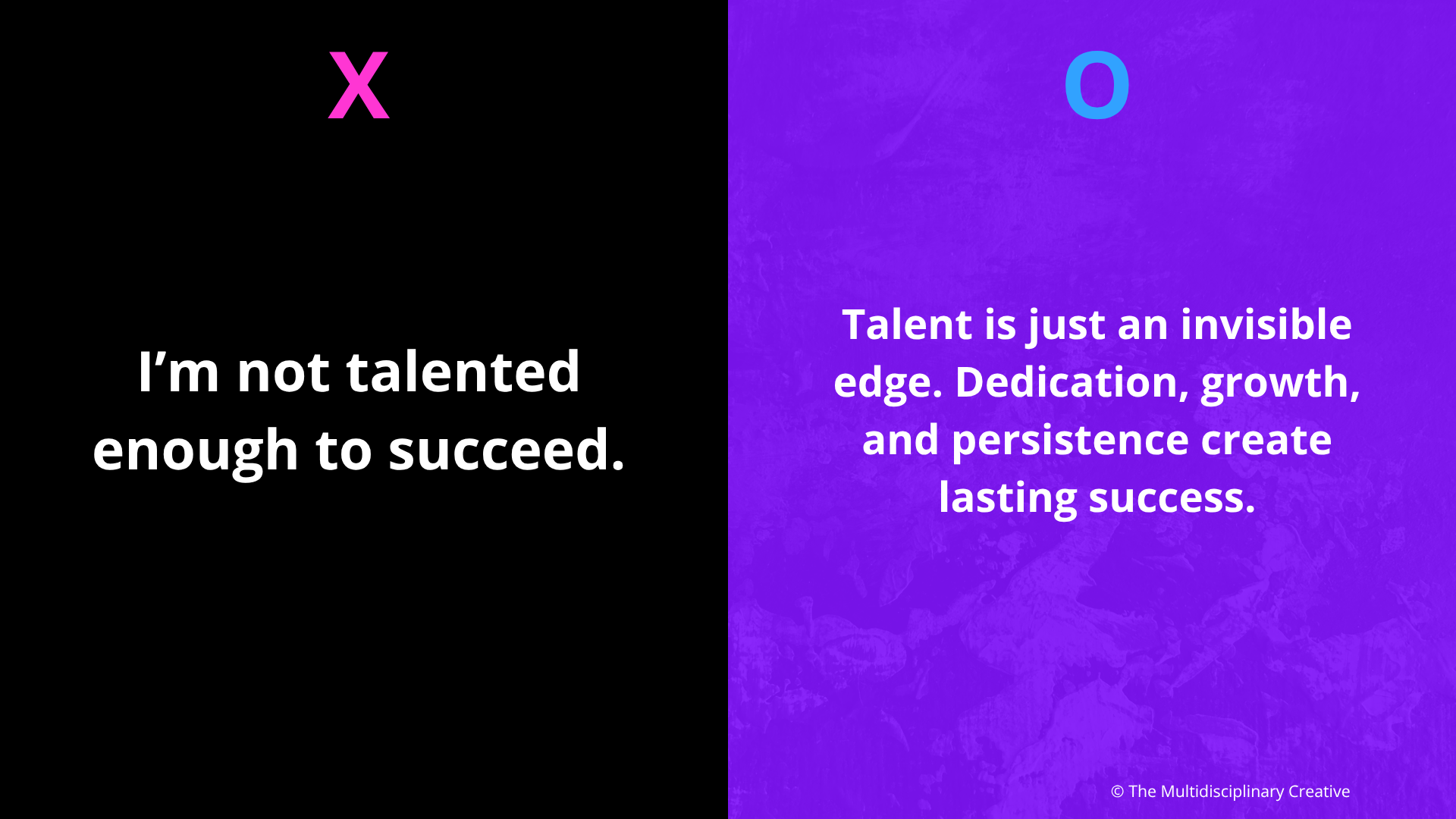
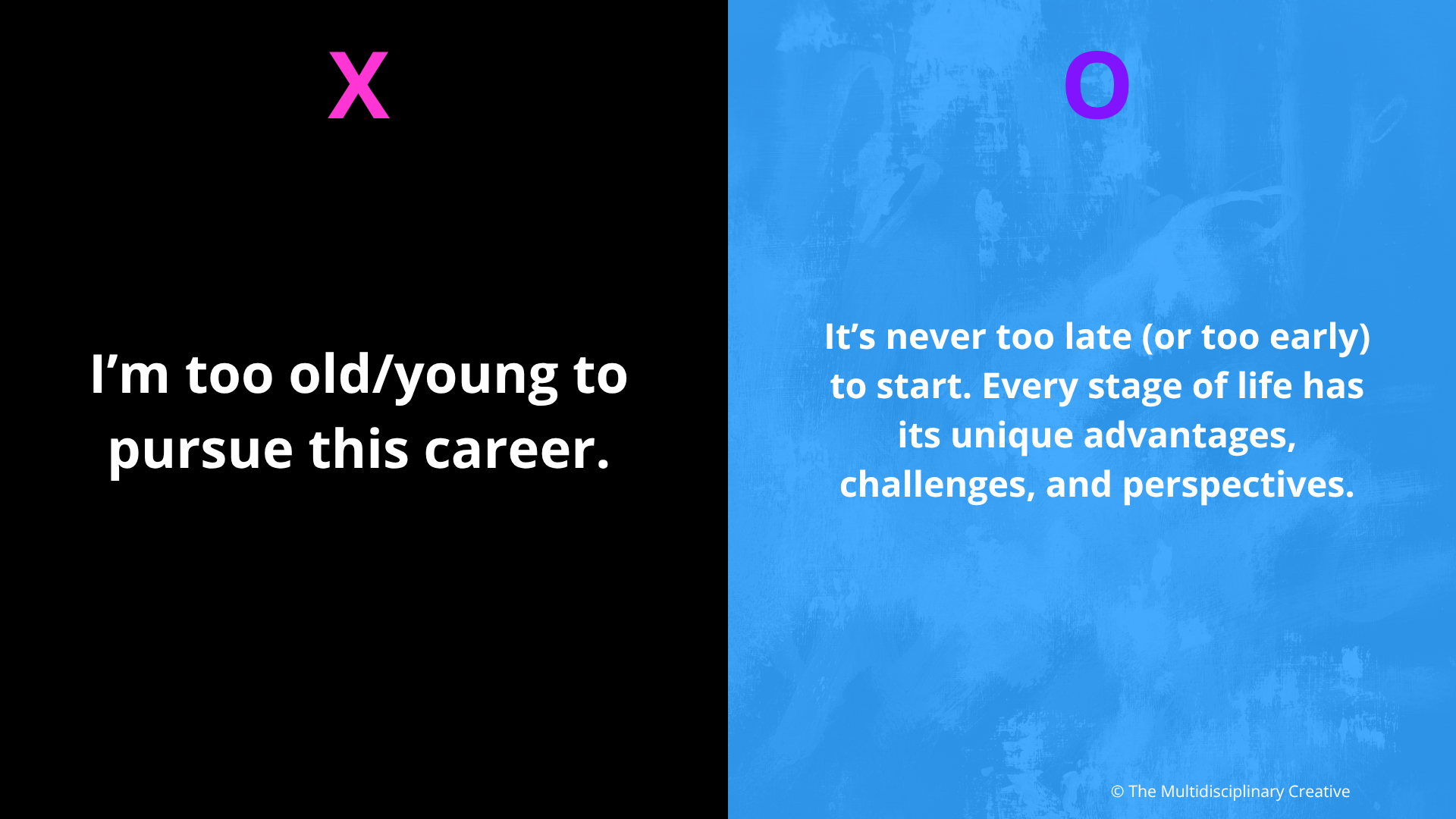
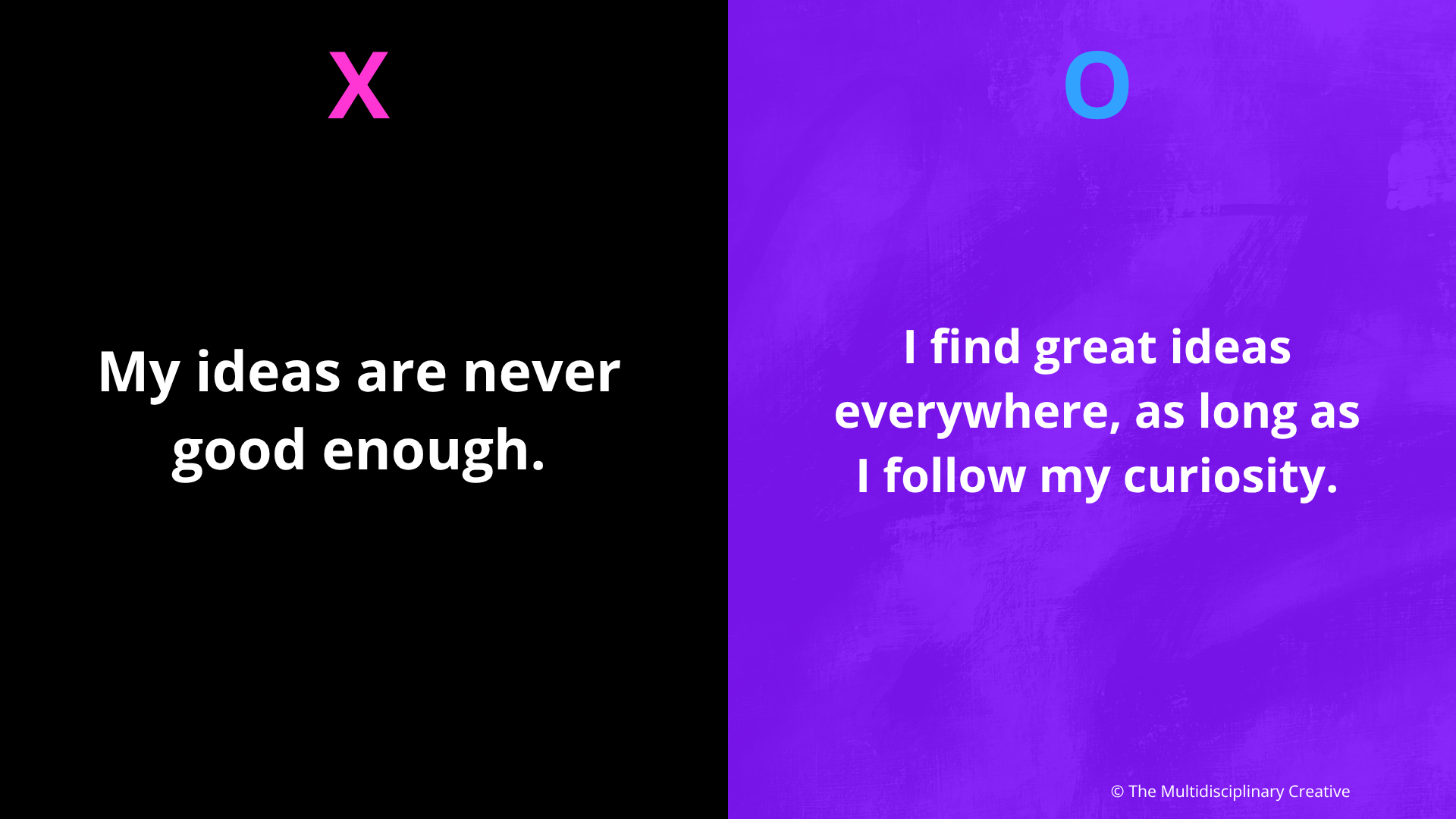
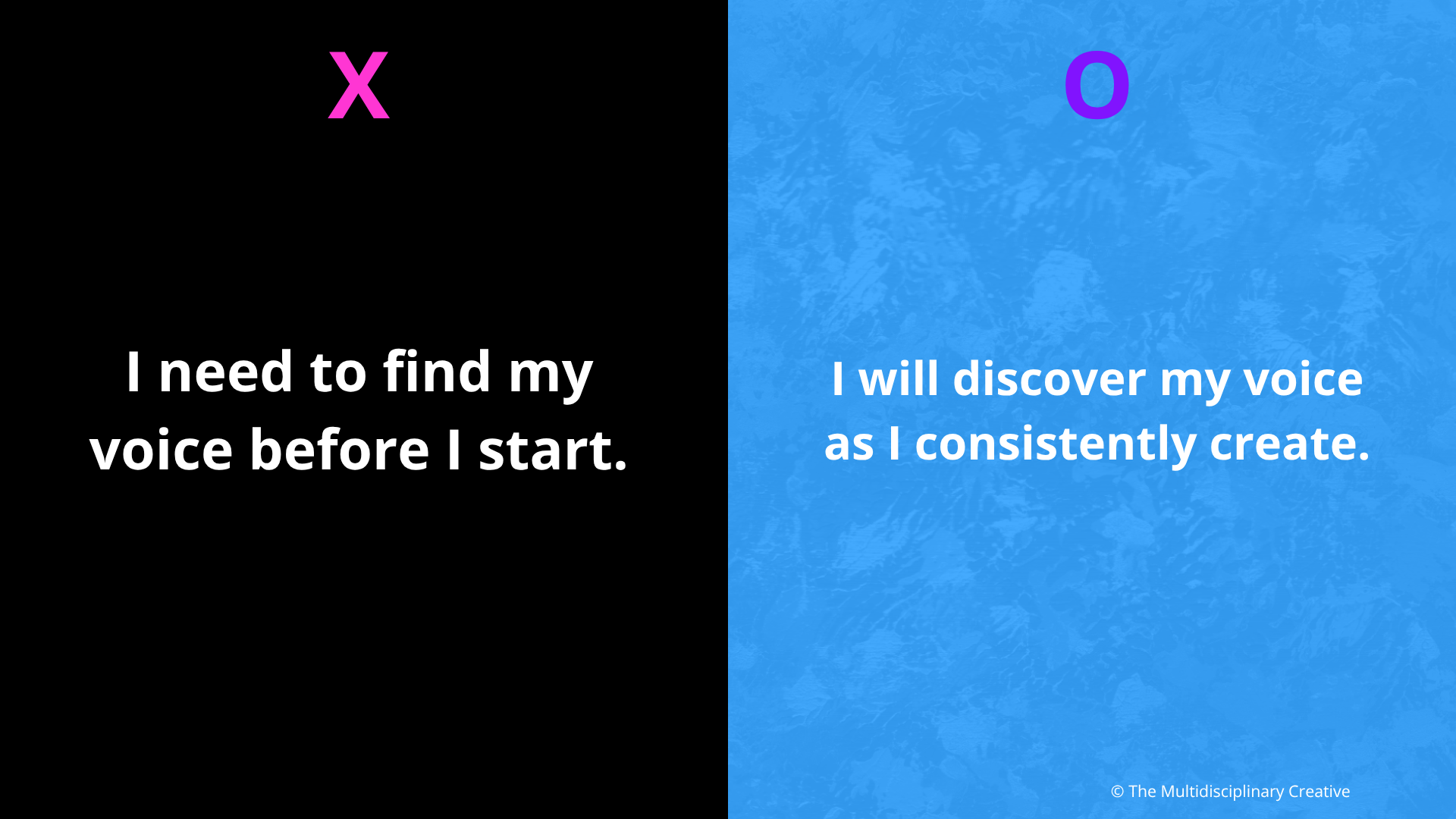
Don’t those empowering beliefs feel so much better? And the great thing about them is that you can use them, and others, every day to shift your beliefs.
If you want to get more examples of these shifts as well as some more practical tips and exercises on how to shift your own beliefs, you can find it all in this separate post on powerful mindset shifts.
Here are some more practical tips:
Do a brain dump of all the thoughts and limiting beliefs you have about your creativity.
You can write it down in a list format, in a mind map, or just wherever you want on the page. It doesn’t matter. All that matters is that you get it all out of your head and onto paper.
Make two columns on a new page and title one “Limiting Belief” and the other “Empowering Belief”.
Put everything from your brain dump into the column for limiting beliefs, then transform those beliefs into more empowering ones (similar to how I did in the images above).
Then go back and read your Empowering Beliefs and choose however many you want to use as affirmations when you notice self-doubt creeping in.
Know Your “Why”
Knowing your “why” is essential for sustaining long-term creativity, purpose, and motivation. It’s the fuel to everything you do, it builds resilience, and it will help you persevere through tough times. Knowing your “why” can also help you find your way to your purpose as a creative.
In other words, knowing your “why” will help you get in touch with your internal motivation for your creative work and help you continue to create even when the journey might not always be rainbows and unicorns.
If you know your “why”, and if it’s strong enough of a motivation for you, it doesn’t matter how you’re going to accomplish something. You’ll figure it out somehow because your “why” matters so much to you.
Knowing your “why” will also help you keep going when fears and limiting beliefs are trying to steer you in the wrong direction or hold you back.
Additionally, when you notice that something is holding you back, it may be an indication that reminding yourself of your “why” is needed.
But, how do we explore and identify our “why”?
Uncovering Your “Why”
Finding your “why” is often a process of introspection, exploration, and experimentation. Here are some tips to help you discover your deeper motivations and purposes:
Reflect on What Moves You
Think about the moments or experiences in your life that have deeply impacted you:
What art, stories, or projects have had a lasting emotional effect on you?
What themes do you find yourself consistently drawn to in your creative work?
Journaling or contemplating these questions can often reveal patterns that point to your “why”.
Identify Your Core Values
Ask yourself what matters most to you. What do you want to stand for through your work? (I.e., freedom, connection, justice, awareness, healing, empowerment, etc.).
Articulating these values can serve as a guiding force in your creative practice, ensuring that your work reflects what is most important to you.
Define Your Artistic Impact
Consider the impact you want your work to have on others. Do you want to inspire, challenge perceptions, educate, evoke emotions, bring awareness to an issue, or something else?
Think about the broader purpose of your work beyond just personal fulfillment. This can help you gain a sense of your “why” in relation to your family, your audience, community, and the world.
Experiment and Reflect
Sometimes, the act of creating in itself can help clarify your “why”. As you experiment with different materials, media, and concepts, take time to reflect on how each experience resonates with you.
Does a particular type of project bring you joy?
What subjects and themes do you enjoy and/or feel the most urgency working with?
Does one style, medium, or subject matter feel more authentic to you?
Your creative process can help you discover what feels most aligned with your “why”.
Here are some more detailed exercises on uncovering your “why”.
Building Creative Habits
One simple way to deal with resistance and possible creative blocks is to build creative habits that will help you get into the creative flow without overthinking things too much.
Building creative habits is also essential for artists and creatives because creativity is like a muscle that needs regular exercise to stay strong. Unlike a one-time burst of inspiration, habitual creative practice helps you consistently engage with your work, improves your skills over time, and fosters a mindset of continuous experimentation and exploration.
If you want a more in-depth post about this topic, which includes additional information and helpful questions, check out this post on creative habits.
How to Build Creative Habits
Start Small and Be Consistent
The first tip is to start small to build consistency. This is especially important if you haven’t used your creative muscles consistently for some time or are feeling blocked.
Experiencing creative blocks isn’t always a dead end. Sometimes, it’s a sign that your creativity is evolving, stretching, or unlocking something new. When you're in the middle of it, however, it can feel frustrating, like you're staring at a blank page or canvas, second-guessing every idea, and waiting for inspiration that never comes. Starting with something small and being consistent can be very helpful here.
You can begin as small as 10-15 minutes a day. Over time, this builds momentum and becomes part of your routine.
You could also set aside a specific time each day for your creative practice to help you build consistency.
Small actions are easier to maintain in the beginning, and consistency is key to making creative work a habit. As you get into it more, you can gradually increase the time to 30 minutes, an hour, or however long you want.
If you want some questions that could help you start small and build momentum, check out this post on creative habits.
Create a Dedicated Space for Creativity
The second tip is to set up a dedicated space for your creative work. If you already have a studio, a corner in your living room, a desk, or something else, that’s great. If you don’t, then this tip is for you.
A dedicated space signals to your brain that it's time to shift into creative mode. It can help condition you to enter the right mindset before you begin your work.
What your space looks like is entirely up to you. I recommend surrounding yourself with things that inspire you and your creative work. It can be certain items, images, inspirational quotes, or something else.
If you want some questions that could help you optimize your creative space, check out this post on creative habits.
Embrace Play and Experimentation
The next tip is to embrace play and experimentation. Even though making art for social change often means that we have a specific reason for working on a project or making an artwork, making something without expectations or specific goals from time to time can also help you fight perfectionism, possible resistance, and feelings of being stuck.
This is also a great tip if you want to explore another medium, topic, movement, or something else. Test it out for a couple of days and see if it’s something you want to do. With this intention, there’s no pressure.
And if you create ugly art in the process, that’s okay. You can actually use ugly art on purpose by making ugly art for experimentation and exploration. Making ugly art is actually very rewarding because testing something new, experimenting, and playing can be the foundation for creative breakthroughs and do wonders for your creativity.
If you want some questions and exercises that could help you to experiment and play more in your creative practice, check out this post on creative habits.
Notice and Get Rid of Distractions
Distraction kills creativity; therefore, the next tip is to notice your distractions and eliminate them.
I believe that dealing with distractions is one of the biggest challenges for full-time artists and creatives, especially when you’re working from home or in an environment that’s not entirely dedicated to your craft. Distractions can derail focus, creativity, and productivity.
Luckily, we can deal with distractions by becoming aware of them and then setting specific boundaries around them.
If you, for example, notice that your phone is a distraction, keep it in a separate room or somewhere where you can’t see it while you’re working. You can also tell your loved ones that they won’t be able to contact you between these specific hours while you’re working.
The key is to be self-aware. By understanding what derails your focus, you can proactively address those specific distractions before they take too much time from your creative work.
If you want an exercise that can help you notice and eliminate your distractions, check out this post on creative habits.
Build a Support System
The final tip I have is to build a support system.
Surround yourself with other creatives or like-spirited people who are also committed to their work. I know this is easier said than done, but we have the internet at our disposal nowadays, so it doesn’t have to be very difficult.
You can find a community of like-spirited artivists through social media, online communities, and programs. If you like real-life communities more, you can take creative courses available in your local area, arrange meetups with people you’ve met online, join organizations or movements that bring awareness to the social issues you want to work with, etc.
The important thing about support systems is that you’ll feel less alone. You can share your progress, discuss challenges, and get inspiration from others. It can also provide you with accountability to keep your creative habits going. Plus, seeing other creatives do their work can be motivating and inspiring in itself.
If you want some questions that could help you build your own support system, check out this post on creative habits.
You Are an Artist and Your Art Matters
At the end of the day, if you’re struggling to create what you want, as much as you want, or up to the standard you set for yourself, and it makes you doubt whether you’re a “real” artist or not, I want you to remember that you are an artist. There’s a reason you’re here, reading this. There’s a reason you want to create something. There’s a reason you want to create art that has an impact. And that reason is that you’re an artist.
I know the world is fucked up right now. It’s easy to get swept up in the chaos, in the headlines, the uncertainty, the things completely out of our control. And for those of you who are living in war zones, facing political unrest, struggling through crises, or just trying to survive, first and foremost, your safety and well-being come before anything else.
At the same time, in moments where things feel too heavy, when the weight of it all is crushing, I want to remind you of something: the world needs your art. To be fair, it’s not easy making art in turbulent times, but it might matter more now than ever before, both to you personally and to the movements and communities you want to reach.
Taking Care of Your Health and Well-Being
Taking care of your health and well-being is just as important as making your art. Without your own health and well-being, it can become very difficult, sometimes even impossible, to be creative and make art.
Therefore, I want to highlight the importance of taking care of your health and well-being in a holistic way.
Holistic Health and Well-Being
The reason I want to highlight holistic health and well-being is that I definitely believe that true well-being comes from more than just one area within the health category. It’s not just about physical health. It’s not just about mental health. It’s about a combination of different areas of health.
The good thing, though, is that when you start to improve one part of your health, the others usually improve too.
Let’s look at some tips on these aspects of health and well-being, and you can choose which ones you want to try.
Overall Tips
First and foremost, I want to mention that there are a few overall tips that are good to have in mind as you focus on your health and well-being. And those are:
Know your limitations. This is important to have in mind as we are all individuals living different kinds of lives with different possibilities, responsibilities, time, etc. Knowing your limitations also includes thinking about your energy levels and how much time and effort you can put into your health and well-being at any given time.
Set boundaries. This is related to the previous tip, but this one is more about setting boundaries around what you want to focus on and what you would allow versus not allow to distract you from what you want to focus on. It can include setting boundaries around not being disturbed during your alone time, putting your phone in a different room to not doom scroll when you’ve decided to meditate for 10 minutes, etc.
Start small if you’re just starting. What is the smallest step you can take to make your physical, mental, and emotional health a little bit better?
Now, let’s get into tips on some small changes you can make to these different aspects of your health and well-being.
Physical, Mental, and Emotional Health Tips
Ergonomic Workspace
Is your workspace ergonomic? Or are there some things you could improve?
Movement/Workout/Stretching
If you don’t already have a consistent workout or movement routine, what kind of movement do you think is fun? Then start doing that for a couple of minutes every day.
I think physical movement, whether that’s a whole workout, stretching, taking a morning walk, etc., is especially important if you’re often in a stationary and static position, or perform repetitive movements when you do your creative work.
If you, for example, write a lot by hand, you might want to add some extra stretches for your wrists in your daily routine.
Nourishing Food
It takes a lot of energy to be creative, and one simple way to make sure you have energy is to eat nourishing food.
What is nourishing to you is very individual because it’s based on many different factors. The best way to figure this out on your own is to take note of how you feel after you eat certain foods. Do you feel tired? Or do you feel energized?
Take Regular Breaks
It’s important to take regular breaks to not overworking yourself or burning yourself out. If you want more tips on this, you can check out the section above where I wrote about overworking and burnout in the Dealing With Resistance, Doubt, and Fear section.
Fun Time
Don’t forget to have fun. If that means working on a creative project that’s just for you and for fun, then please do so. If it means not doing anything creative at all and just lying on the couch reading a book, then please do that too.
If you didn’t make a list of the things you find fun in the section about overworking and burnout in the Dealing With Resistance, Doubt, and Fear section above, then do so now. Make a list of all the things you think are fun to do. Then, next time you have a break or some alone time, do something from that list that speaks to you in the moment and have fun with it.
Get Enough Sleep
Again, it takes a lot of energy to be creative, so taking care of your energy levels is a good idea. One way to feel rested and energized when it’s time to be creative is to get enough quality sleep.
Whatever “enough sleep” and “quality sleep” mean to you is very individual, but you can explore it deeper if you want to:
Do you know how much you need to sleep to feel rested and energized?
When was the last time you woke up rested and energized?
Can you see a pattern between that night and other nights where you had a good night's sleep?
How can you replicate those patterns to improve your sleep night after night?
Learn How to Handle Stress
This is also a very individual aspect of your health and wellness. You might find stress relief in lifting weights, singing, creating something with your hands, or being in nature, to name a few examples. Having something in your toolbox that you can use whenever you feel stressed or overwhelmed is great. It can also help you make better art if you feel relaxed and motivated to create.
Healthy Relationships
This includes the relationship to yourself and others.
Are you treating yourself with respect?
Are you treating others with respect?
And how are you letting others treat you?
It also includes knowing your limitations and how to set boundaries.
Have you had an honest conversation with your family and loved ones about your boundaries?
Have you told them how much or how little input you want from them about your creative career or your artworks?
These questions are important to think about, especially if you are affected in a big way by the people in your life. You might think you only have chill relationships and are surrounded by people who support you, but these questions can be good to think about either way.
Dealing With Haters
Now we’re coming to a section that’s not the most positive part of being an artist and a creative in today’s day and age, but it needs to be said anyway.
There will always be haters and unfair critics if you are putting yourself “out there“. Considering you’re an artist and a creative who wants to make art for social change, putting yourself or your work “out there“ is part of the deal, which unfortunately means haters will probably show up sooner or later.
So, how can we deal with haters and unfair critics?
One way is to focus on the positives and the impact that you are making with your art (or the potential impact you can have with your art). You could, for example:
Create a “love bomb” folder on your computer or Google Drive where you gather screenshots of all the nice comments you’ve gotten on social media, in emails, etc. You can also write down memorable conversations you’ve had with someone and how that made you feel. Whenever you come across a not-so-nice comment, dive into the love bomb folder and read all the very nice comments you’ve gotten from other people.
Reach out to your community for support. This is also why finding a community of like-spirited artists and creatives is important. This can also include family members, if you can lean on them for emotional support.
If you’re just starting and haven’t found a community or made any impact with your art yet (or the impact that you would like to make with your art), it might not be very easy to focus on the positives or lean on others for emotional support. If this is you, I want you to remember a few things:
Anonymous people on the Internet are too scared to put themselves out there, which is why they are picking on other people who have the guts to do so, which makes their comments all about them and not you
If it’s a stranger on the Internet (which haters often are), they don’t know you, your work, or the intention behind your work, which means that their opinions have nothing to do with you
If you need to take a break from places like social media to protect yourself, please do
If you need to set up specific boundaries to make sure that hateful comments don’t reach you, please do. That can include flagging specific words in comments, blocking people and accounts, and having your team (if you have one) sort out hateful comments or emails so that they don’t reach you, etc.
The key here is to make sure that you are taking care of yourself first. If that means removing yourself from specific situations or being upfront and honest about your boundaries and what you accept and what you don’t, then please do so. Your health, well-being, and your work matter more than some hater on the Internet.
Prioritize Your Own Safety
Another very important thing to have in mind is to prioritize your own safety. This is especially for you if you stand up for what you believe in in a part of the world where you can get sued, imprisoned, or worse.
Considering free speech is under attack globally, having your own safety in mind is important, even though many artivists would not let that stop them. I still think it’s very important to consider your personal safety too, though.
I have some guidelines for you that could be considered before you start making art for a specific topic or movement:
Always look at potential risks you might run into on a personal level. The risks depend on many factors:
Where you live/are from and what political forces are at play in that country
What the legal system looks like
Who you take a stand for/against
Etc.
Do you have a support system that could help you if you were to be sued or imprisoned?
Are the risks worth it for you?
Only you will know and can choose if the risks are worth it for you or not, and then it’s your choice to act or not based on that information.
How to Make Art for Activism and Social Change
Now, let’s get into the fun part!
Your Values
It’s a good idea to start with your values. Your values will affect your work, how you put it “out there”, etc. So it’s a good idea to think about your values first.
Ask yourself:
What topics and movements are important to me? Which ones are not important to me?
What do I want my art to represent? What do I not want my art to represent?
What is the message I want my art to promote? What message do I not want my art to promote?
Which topics and movements can I talk about forever? (Considering you might have to talk about your art for a very, very long time, make sure you pick a topic that you want to and can talk about for a very long time.)
What kind of media can I use to promote that message? What media do I not want to use? Are there any media that would be controversial to use, depending on the message I want to promote through my work?
Take Inventory of the Skills You Have
Before you can determine what you want to create, it’s a good idea to take inventory of the skills you already have. You can write them all in a list if you want to.
Here are some examples and guidelines:
What are your artistic/creative skills?
Look through your previous work and/or your sketchbooks to see what you’re good at (if you don’t have a sketchbook practice, it could be highly beneficial to create one.)
Perhaps you’re a multidisciplinary or an interdisciplinary creative who has many different skills
Do you have any specific social media skills you can use?
Organizing skills
Etc.
Take Inventory of the Topics and Movements You’re Interested In
When you take inventory of the topics and movements you’re interested in, keep your values and your skills in mind.
Here are some guidelines you can use:
Find 3 topics/movements (make sure they’re of interest to you, because you might end up talking about them day in and day out)
Identify and research the topic/movement
Decide if you want to reach out to organizers to create art for them, or if you want to create for yourself (to promote on your website/social media accounts, share on billboards, put up on lamp posts, sell on your own, get into galleries, etc.)
If you want to create for others, find organizers for that topic or movement
Show up as a student who is willing to learn
Make art about what you’re learning and share it and your process on your platforms (this is a great way to invite your followers to learn with you)
Choose Your Medium
Not all mediums work with all types of artwork you might want to do, especially not if you’re working with a movement or organization of sorts that wants a specific kind of printable, video, song, or whatever it may be.
First and foremost, you wouldn’t accept doing work in a medium that you’re not well-versed in if you’re working with or for a movement or organization of sorts. Focus on choosing work in mediums that you are comfortable with.
Choosing your medium can also be at the intersection between your skills and your interests. Perhaps you want to highlight how few women philosophers are being talked about and read at your college, and you’re really good at graphic design, you might create a poster that you put up on the walls around your college. Or maybe you share it on social media while tagging your school.
Or maybe you’re more of a writer, so you make a zine about the topic, print it out in as many copies as you would like, and disperse them everywhere around your college. Writing something about writers who are not read might actually be an interesting way to bring awareness to this issue.
Choosing your medium can also be affected by the social issues and injustices you work with or the message you want to stand for. If you’re a painter and want your art to portray climate change, it might not be a good idea to use environmentally unfriendly or toxic ingredients to make your paintings.
Uncover Your Artistic Style and Voice
Now it’s time to dive deeper into some fun stuff that will take some time and effort to go through, but it will also give you so much back to you and your work when you do. An that’s to explore your artistic style and voice.
If you want to dive even deeper into this topic, you can check out this ultimate guide on artistic style and voice for artivists.
The Difference Between Style and Voice
First, it’s important to summarize the difference between style and voice.
Style
Style refers to the aesthetic choices and frameworks you use in your creative work. It’s your personal aesthetic and what you find beautiful or captivating. It also includes your process, technique, and execution.
In other words, style is the “how” of your work.
Voice
Voice refers to your work's underlying expression, message, perspective, and unique, personal marks. It reflects your personal perspective, thoughts, emotions, and worldview, to name a few things.
In other words, voice is the “why” and “what” of your work.
Here, you can find more information as well as examples on the difference between style and voice.
Create a Lot of Art
There are many different ways that you can play around with uncovering your artistic style voice, but one of the simplest ways to do that is to create a lot of art.
This is a fun part of the process of making art. Every time you create something new, it feels like you are coming closer to a style, a voice, and a message that rings through to you and that you are proud of. This happens even if you create something that you don’t necessarily like or something that doesn’t feel like you, because then you know what you don’t want to create next time.
Personal Symbols
Another way to uncover your personal style and voice as an artivist is to dive deeper into personal symbols.
Symbols are a vital component of human expression. They represent something beyond their literal meaning. Personal symbols can emerge as visual motifs, themes, or recurring images that represent deeper aspects of your inner world or the message you want to communicate.
Personal symbols can also offer a type of language to express things that words alone can’t. These symbols can be used in any type of creative work you do, from painting to writing to music or knitting. In anything, really.
Here are a few exercises you can do to explore your own personal symbols:
Explore Your Dreams
Exploring the dreams you have while you sleep, in particular the symbols you notice and remember, is a great way to discover symbols buried deeper within your subconscious. The symbols that show up in your dreams are, therefore, often rich with personal meaning.
To summarize, this exercise is a 3-step process:
Keep a dream journal for a week or two and write down your dreams.
After you’ve recorded your dreams for a week or two, review your notes and look for patterns in the form of recurring symbols or images.
Reflect on what the symbols mean.
If you, for example, notice the recurring image of a lion showing up in your dreams, consider the lion’s qualities (for example, strength, courage, leadership) and how these may be relevant to your personal life and work.
You can find a more detailed process of this exercise in this post about personal symbols.
A Collage of Personal Symbols
This exercise is about finding symbols that resonate with you on a deeper level and making a collage out of them.
To summarize, this exercise also has a 3-step process:
Gather images and symbols that resonate with you and create a collage with them. The important thing here is to let your intuition guide you. Don’t overthink this process.
Look for repetition and patterns in the images you’ve chosen as you work on the collage. What are the recurring images and symbols you see?
Reflect on and analyze the collage after you’re done.
If you feel called to do this exercise, you can find a more detailed process of it in this post about personal symbols.
Symbol Mapping
The third exercise is similar to a mind map where you dive deeper into your life experiences to identify significant symbols.
To summarize, this also has a 3-step process:
Start with yourself in the middle and then create branches from the center that represent significant moments in your life.
For each key moment or experience from your life, draw or write symbols that come to mind. These are symbolic representations of your experiences.
Analyze your map after you’re done to identify recurring themes.
If you feel called to do this exercise, you can find a more detailed process of it in this post about personal symbols.
Reflecting on Personal Symbols in Your Work
The final exercise here is to keep exploring if any of the symbols that showed up in these exercises have shown up in your creative work. Think about, or look at, your work and ask yourself:
Do any of these symbols you’ve discovered appear in your creative work?
Have these symbols evolved over time, or have they stayed consistent?
How do these symbols enhance or deepen the meaning of your work?
There are some additional questions from this exercise in this post about personal symbols.
Your Aesthetic
Another way to uncover your personal style and voice as an artivist is to explore your aesthetic.
What is an Aesthetic?
Your aesthetic is essentially the visual language, vibe, and emotional tone that runs through your work.
Within a visual medium, it can be the unique combination of colors, forms, textures, symbols, and the overall mood that you create in your work.
Within the written word, it can be your descriptions, symbols, and other forms of imagery you choose to include in your work.
A personal aesthetic is basically the essence of your creative identity, which is shaped by your influences, what you find beautiful, your values, experiences, and interests, to name a few things. Again, think of it as your personal artistic fingerprint.
Why is an Aesthetic Important?
One of the reasons it’s important to explore and identify a personal aesthetic is that:
It gives your work a creative direction and cohesion. This is especially important if you work on a series or a collection where you want a certain cohesion (e.g., a series of pieces that bring awareness to one and the same cause or social issue/injustice).
Also, if you’re a multidisciplinary creative, having a clear aesthetic makes it easier for your audience to identify your work regardless of what you create.
And, it can also help you with your branding as you put your work out into the public eye.
Now, let’s move on to some creative exercises that will help you explore your own aesthetic. I will only summarize the exercises in this lesson to give you an overview. But the full instructions are in this post on aesthetic. And, as usual, only do the exercises that resonate with you and that you feel called to do, and then leave the rest for now.
The Things that Stand Out to You
Before you can fully understand and/or visualize your aesthetic, you need to acknowledge the things you find beautiful, the things that move you, and the things that pique your interest.
The fastest and easiest way to do this is to create a secret board on Pinterest and pin every image that stands out to you onto that board.
Then, when you have around 40-50, or more, images on that board, you can start looking for patterns and commonalities.
If you want more instructions and guidelines about this, check out this post on the subject of aesthetic.
Map of Influences
Another fun way to explore your aesthetic is to dive deeper into the art that influences and inspires you and your work. We’ll be doing that by collecting images to create a map of influences, which you will reflect on when you’re done.
The images you collect can include:
Specific paintings
Books (or quotes from books)
Films and shows (perhaps specific scenes)
Photos from a specific photographer
Images of specific pieces from a fashion designer’s collection
Sculptures
Music albums or lyrics
Etc.
This exercise will also help you be better able to combine ideas from different sources so that you won’t run the risk of copying the works you love and have had an impact on you.
If you feel called to do this exercise, you will find the detailed instructions in this post on the subject of aesthetic.
Define Key Elements of Your Aesthetic
In the third exercise, we will look at your work and define key elements of your aesthetic. Looking closely at the work you’ve already created can give you insight into what you naturally gravitate toward, even if you haven't consciously defined it yet.
By looking at your own work, you can begin to distill the key elements of your personal aesthetic. These elements are the building blocks of your unique style.
Here’s a summary of the exercise:
Select some of your most recent work, perhaps it’s three books, five poems, ten paintings, or something else.
Then look for the bigger recurring patterns, themes, and imagery, as well as the smaller details you use. You can look at:
Themes
Symbols and imagery
Colors and textures
Shapes and forms
And more
If you feel called to do this exercise, you will find the detailed instructions in this post on the subject of aesthetic.
Refine Your Aesthetic
Now that you have a better idea of your influences and what aesthetic your recent work has, the final exercise will help you refine your aesthetic.
This exercise builds upon the previous ones. However, you can do this one if you’ve done only one of the previous exercises as well.
The core of this exercise is basically to take what you’ve discovered in the previous exercises and reflect on how you can use that in your work going forward.
If you want some more guidance and instructions for this exercise, you will find them in this post on the subject of aesthetic.
Your Vision
Another way to uncover your personal style and voice as an artivist is to uncover your vision.
What Do I Mean by Vision?
Every artist or creative has a unique perspective shaped by their experiences, worldview, and influences, to name a few fundamental things. That unique perspective, in turn, influences:
The vision you have for your creative work and artistry
What you want to create
The message you want your work to communicate and stand for
What you want it to look like
Etc.
In other words, your vision is the common thread that connects your work together.
Below follows a few questions and exercises you can do to explore the vision you have for your art. If you want more detailed information about this topic or the exercises that follow, check out this post about vision. Now, let’s dive in.
Journaling Prompts
I first recommend that you do some simple journaling on the vision you have for your work. You can journal however you want. If you prefer to do it in a mind-map kind of style, that’s great too.
Here’s a summary of the questions, which you can find expanded on in this post about vision:
Message: What do you want your work to say? What message do you want your work to communicate?
Style: What do you want your work to look and feel like?
Purpose: Why do you want to create what you want to create?
Aspirations: How far do you want to go and reach with your work?
Clarify Your Vision, Message, and Purpose
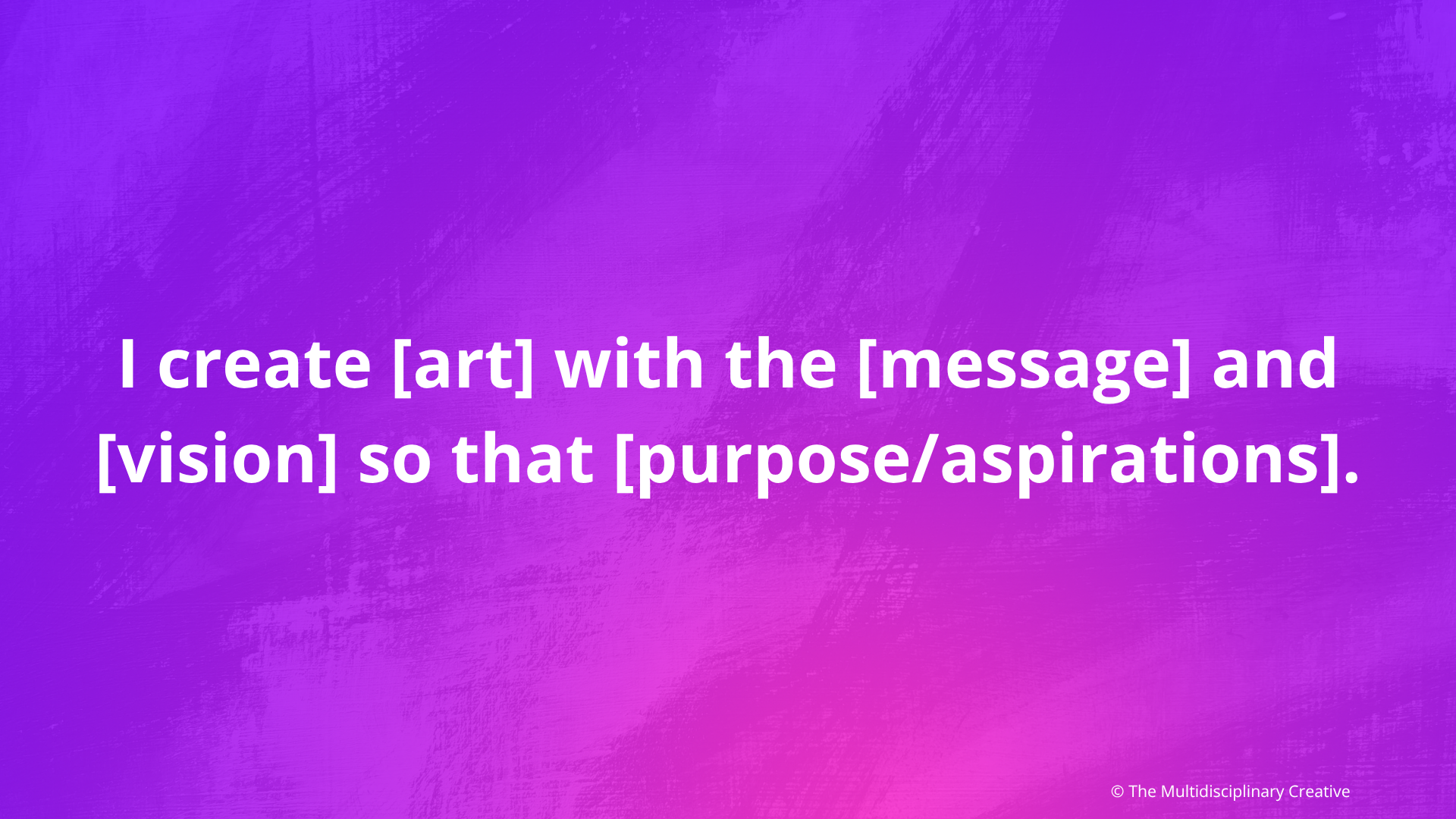
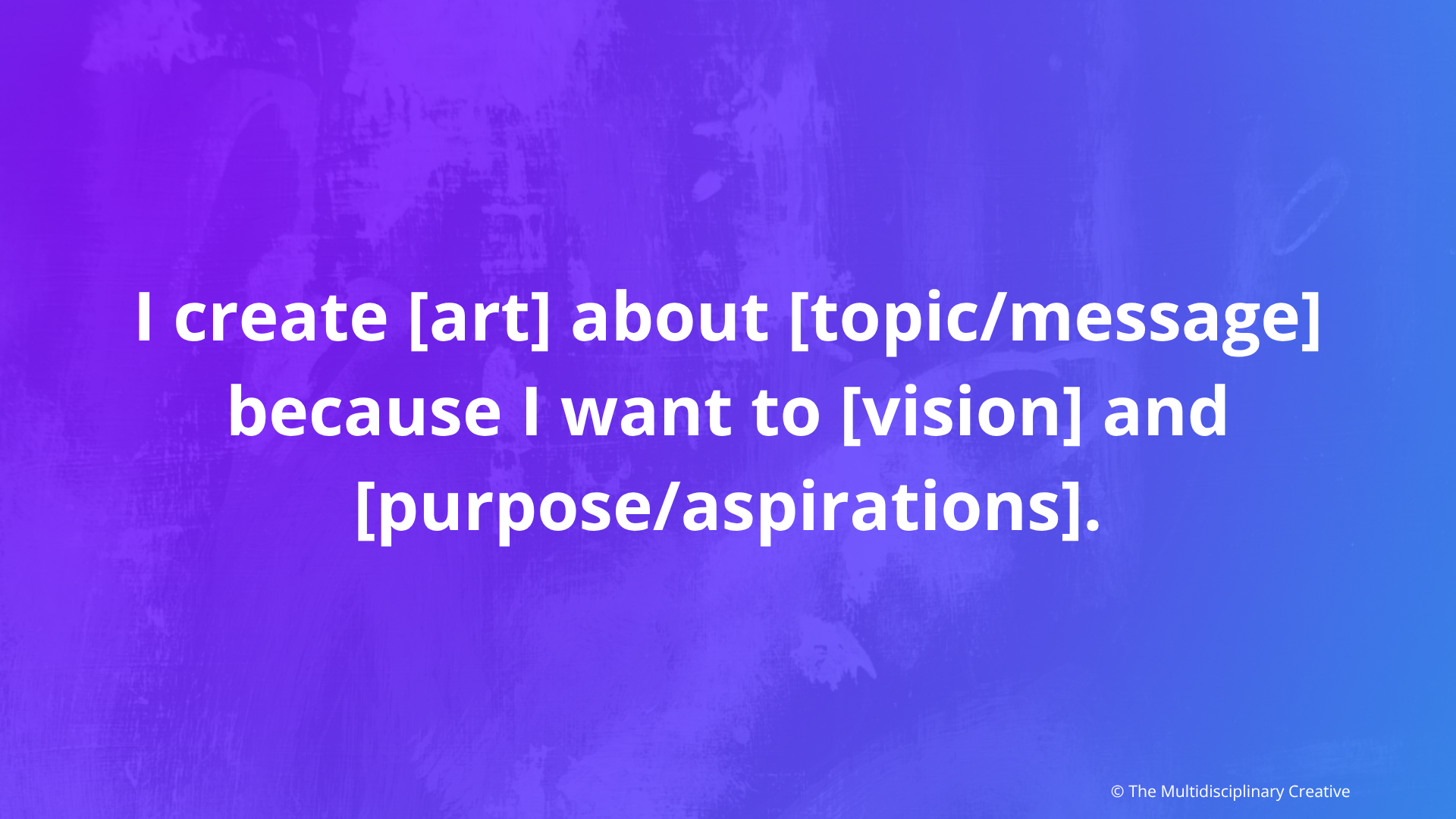
The next exercise builds upon the previous one. Here, I want you to write a vision statement that defines what you aim to express through your art. This statement should reflect your vision, message, and the purpose of your work.
Here are two template examples you can use or tweak to fit your own needs:
Again, if you want more detailed instructions about this exercise (including examples of vision statements), check out this post about vision.
Explore Your Vision Through Experimentation
The last exercise in this section will take some more work because I want you to explore your vision through experimentation.
What I want you to do in this experimental exercise (in summary) is to:
Create a small body of work. It can be a series of smaller paintings, a couple of poems, a couple of story outlines, a series of thumbnail sketches, or something else.
As you create, focus on expressing your vision as authentically as possible.
When you’re done with this smaller body of work, it’s time to reflect on what you’ve created from the lens of your vision:
What aspects of the pieces feel most aligned with your vision?
What surprises or new insights emerged during the creation process?
Again, if you want more detailed instructions about this exercise, or any of the ones I listed in this section, check out this post about vision.
Your Unique Edge
Another way to uncover your personal style and voice as an artivist is to uncover your unique edge.
Your Unique Edge
Your edge is often found at the intersection of different aspects that make you who you are. It can include, for example:
Your story
Your skills
Your motivations
Your purpose
Your passions
Your perspectives
Etc.
The reason I call it your “unique edge” is that your combination of these aspects is different from anyone else’s combination.
In other words, your edge is the thing or the combination of things that makes you different. It’s what sets you apart as an artist and what makes your creative work and artivism uniquely yours.
So, how can we explore and identify our unique edge? As usual, I will go through a couple of exercises that will help you dive deeper. And, as usual, only do the exercises that resonate with you and that you feel called to do, then leave the rest.
Journaling Prompts
I first recommend that you do some simple journaling on some prompts that I’ve included below. You can journal however you want. If you prefer to do it in a mind-map kind of style, that’s great too.
Here’s a summary of the prompts, which you can find expanded on in this post about your unique edge:
Story and personal experiences: What are the stories, emotions, and experiences that are uniquely yours?
Skills: In what ways do you use materials, techniques, or technologies to express your ideas?
Interests: What are the themes, messages, movements, mediums, processes, social issues, etc., that you feel deeply connected to and curious about?
Perspectives: What’s your unique viewpoint based on your background, heritage, experiences, values, etc.?
Then, reflect on all of that and look for patterns and commonalities in your answers.
Again, if you want more detailed prompts, check out this post about your unique edge.
Your Personal Story
The next, and final, exercise in this post will help you explore your own story a little more. If you’ve already done some of that in the previous exercise, then you can use this one to select parts from the previous exercise and go deeper with them in this one.
What I want you to do here is to make a list of all the stories and experiences from your life that are worth telling and expressing through your art. They can be anything from funny stories you want to tell to painful events you want to transform.
Think back on your life and list all the stories that are worth telling and then look at them to see if you can find a common thread.
Then, as always, I want you to reflect on how you can translate that into your work. And if you want some additional help and guidance with that, you can find it in this post about your unique edge.
How to Integrate Your Style and Voice
Now, let’s look at how you can integrate your artistic style and voice.
What Do You Want to Infuse in Your Work?
The first thing I want you to do is to gather all the things you’ve created through the exercises above. You will be using your ideas from those exercises in the following ones.
When you’ve gathered everything, refresh your memory with what you’ve written and created.
When you’re done, I want you to make a list of the parts of your style and voice that you want to include in your work. That can be anything from symbols to themes to a certain aesthetic to an event in your past, and so on.
If you want more instructions and guidance on this, you can check out this post on how you can integrate your artistic style and voice.
How Can You Integrate Your Style and Voice?
Next, I want you to reflect on how you can integrate and combine your style with your voice.
If you’ve discovered that you, for example, love birds and that you value freedom, that’s pretty easy to combine.
If you’ve discovered that you, for example, like straight and clean lines but also have a spontaneous personality, how can you combine those?
Or maybe you’ve discovered that you like a darker aesthetic but want to share a hopeful message, how can you combine those?
If you want more detailed instructions and guidance (with examples) on this, you can check out this post on how you can integrate your artistic style and voice.
How Can You Infuse That in Your Work?
Next, I want you to think about and make a list of all the ways you can use those combinations of your style and voice in your work.
Take some time to explore this logically before you put it into practice in your work, because the only way you’ll see if your combinations actually will work or not is if you put them into practice. But thinking about them logically first might give you some ideas of how to approach your experiments when you start testing them out with practice.
So, whenever you’re done with this exercise, I want you to start experimenting with this in your creative work.
I recommend that you do it on a side project first so that you don’t mix it up with your current work. If you like what you see, you can always use that in your main work too.
If you want more instructions and guidance on this, you can check out this post on how you can integrate your artistic style and voice.
Birth Chart
Another way you can uncover your style and voice, especially if you’re interested in astrology, is to look at your birth chart and identify specific planetary placements to see what topics and styles may interest you.
Here are a few planets you can look out for:
Your Sun placement, which might indicate a specific topic or area where you want to shine a light
Your Moon placement, which might indicate the social issues, topics, and movements that move you on a deeper level
Your Mercury placement, which can indicate the message you want to communicate out into the world
Your Venus placement, which can indicate the artistic style you’re drawn to
These are only a few planets you can look out for in your birth chart, but it’s a good start.
Develop Your Artistic Message
Developing your artistic message is also a fun part of the process of making art. And just like with uncovering your artistic style and voice, developing your artistic message also requires a lot of exploration, experimentation, and just making stuff.
Every time you make something, it’s also important to evaluate it. The reason you want to evaluate it is because it will give you more information about what you like about it, what you don’t like about it, what you would want to do next, it clarifies your message and values, what you want to bring awareness to, etc.
When you’re evaluating your message, you can ask yourself questions like:
What kind of message am I communicating through my work? Is that the kind of message I want to share? If not, do I want to tweak my work or my message?
Is my message aligned with my values?
Does my chosen medium/media support the message and theme(s) I want to portray and bring awareness to? Can my message and theme(s) be better communicated through another medium?
Execution and Impact
Create
Create art based on your values, your medium(s), and the topics and social issues and injustices you want to bring awareness to. If you’re collaborating with a movement or organization, you obviously have to keep their possible guidelines in mind as well.
Then, get lost in the creative flow and create as much as you can and as much as you want. Don’t worry too much about the outcome at first, just create. Evaluating is always good to do throughout the creative process, just not to the extent where you keep editing yourself when you’re in the creative flow.
When you do evaluate what you’ve made, you can ask yourself questions like:
What’s working? What’s not working? What can be changed to make it work better?
Is the topic or the message I want to portray clear enough?
Can the audience clearly see which social issues and injustices I want to bring awareness to in this work?
Is there anything upsetting or controversial in a mean-spirited or ignorant way? If so, do I want to keep that?
Does the work nail the brief? (This is especially important if you’re working with an organization or movement.)
Continue to create until you are satisfied with the work.
Participate
When you’re done making art for a specific topic or movement, it’s also important to participate in the movement and spread the word, especially if you’re working with a community or an organization of some kind.
Connect With Your Audience
One way to spread awareness around the topic or movement of your choice is to connect with the intended audience. By audience, I mean both people who are within the community or a movement that you’re a part of and promoting, but also the people who are in positions to make social change actually happen. Because unfortunately, we can’t do this on our own. We need the people in power to make sure that the changes are happening.
You can easily do this by documenting everything you do, from your creative process to information about the social issues and injustices you want to bring awareness to, and sharing that with your audience through the internet.
Collaborate
Another way to make an impact is to be open to collaborating with other people, movements, and organizations. Collaborating is a great way to amplify the causes and message. There’s a bigger chance that the message you want to communicate and put “out there” gets traction when collaborating.
Review
And then, like with everything else, it’s important to review to do better next time, even if it’s just a little bit better.
It’s also great to review what you’ve done so that you can better understand what it is that you want to create, the values you have, the message you want to communicate, the movements you want to create for, etc.
Final Words
Making art for social change feels more important now than ever before. This guide was meant to help you, at the very least, get started if this is the path that you see yourself on.
Now, I would love to hear from you:
What is your biggest struggle as an artivist? Share your thoughts in the comments below.
Join the MDC email list to get news, peeks behind the scenes, and other things I only share in email right into your inbox.
